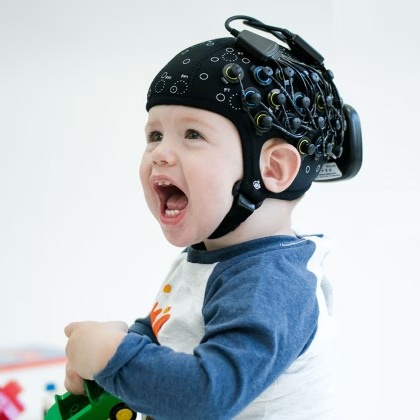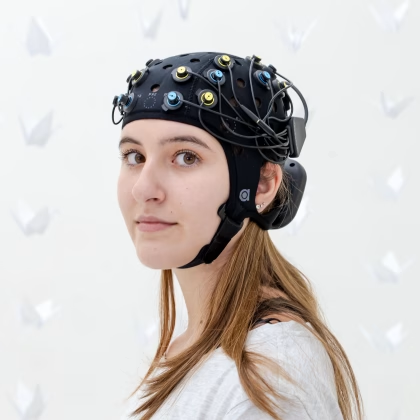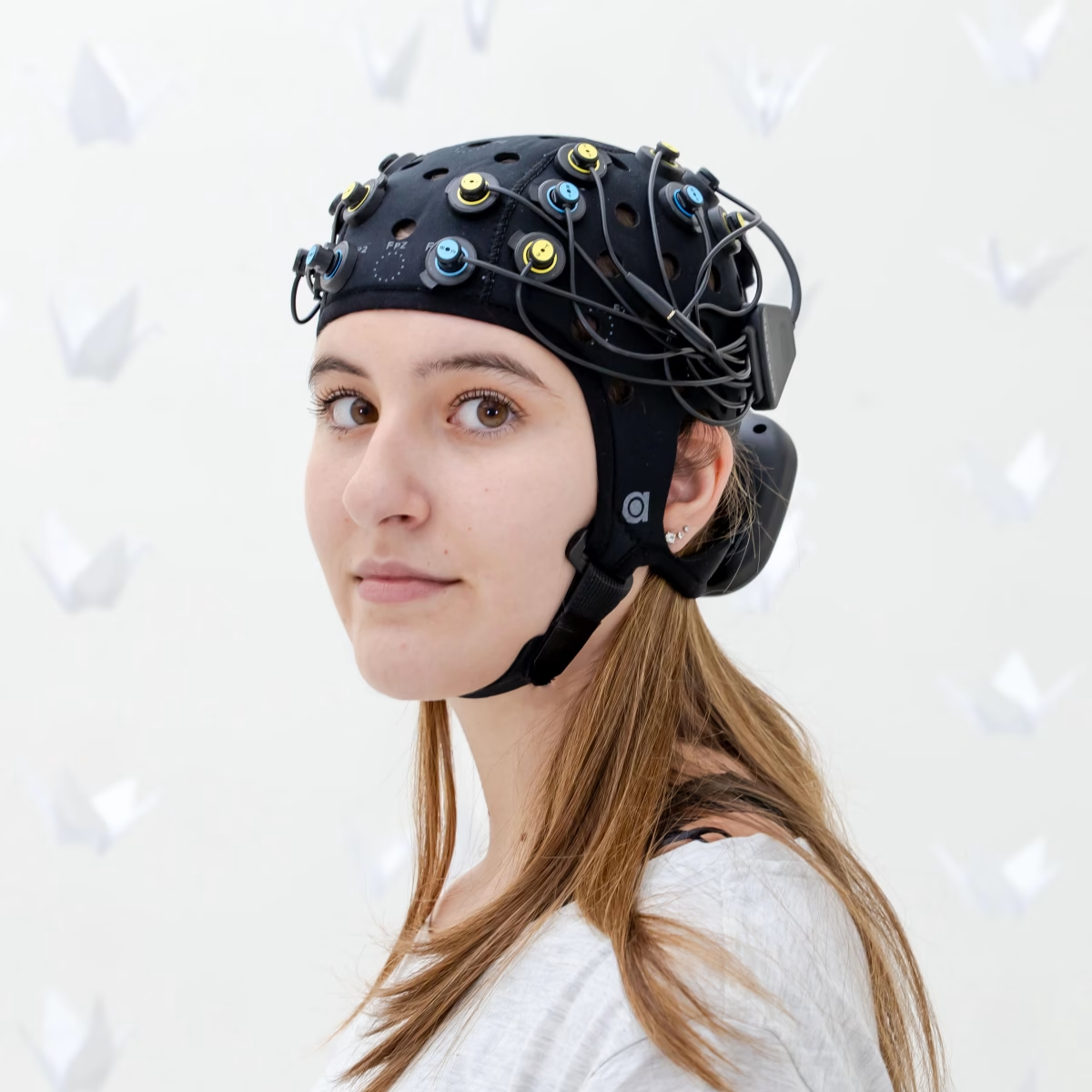
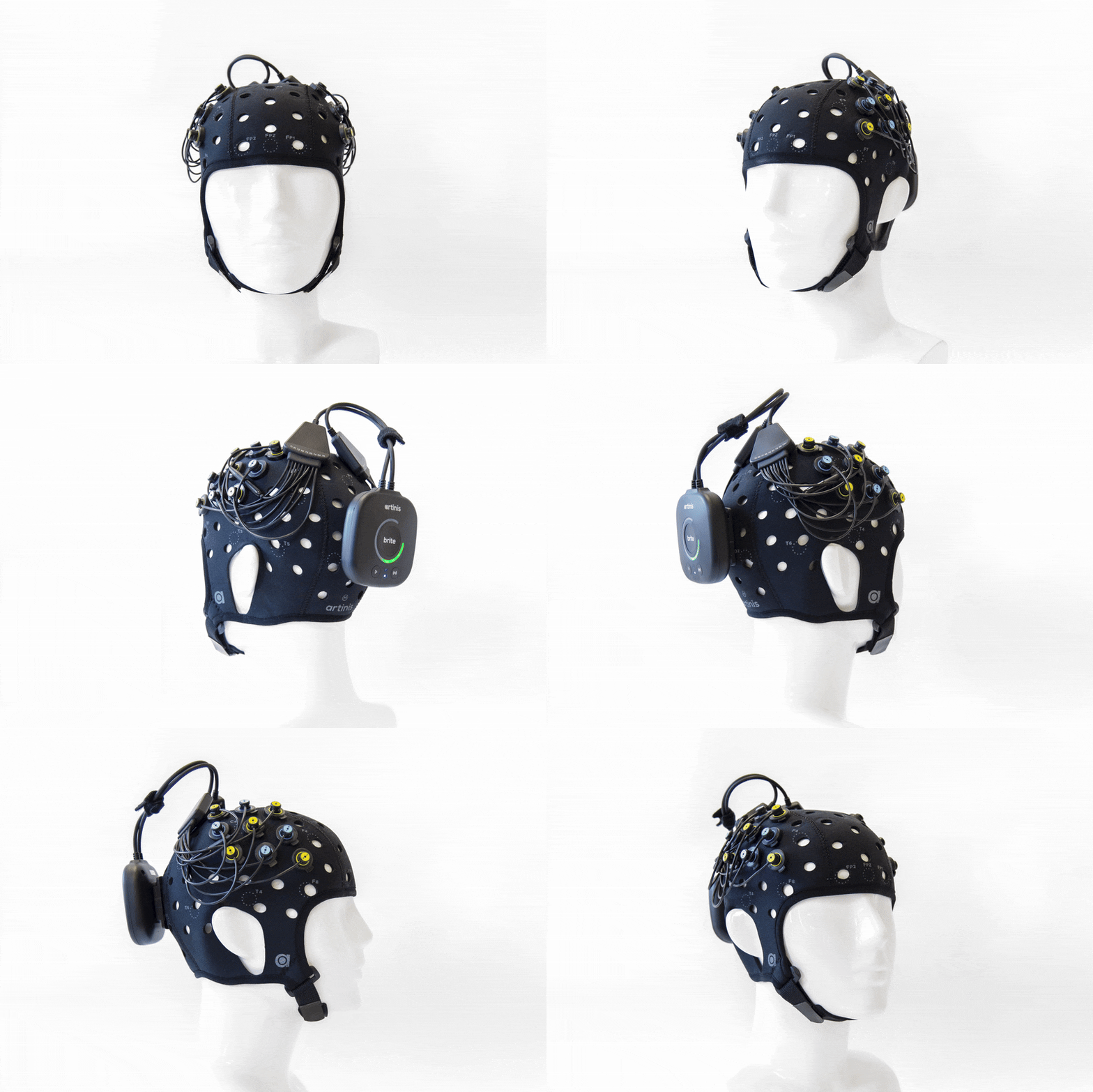
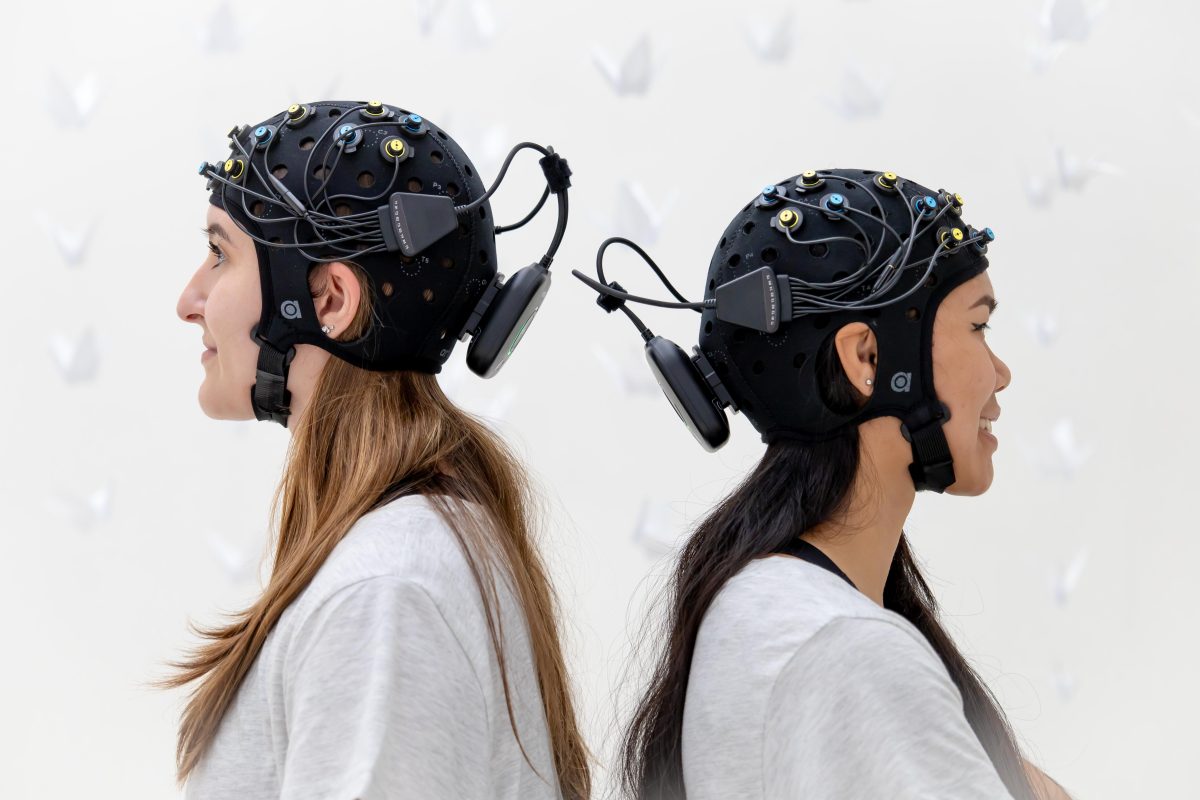
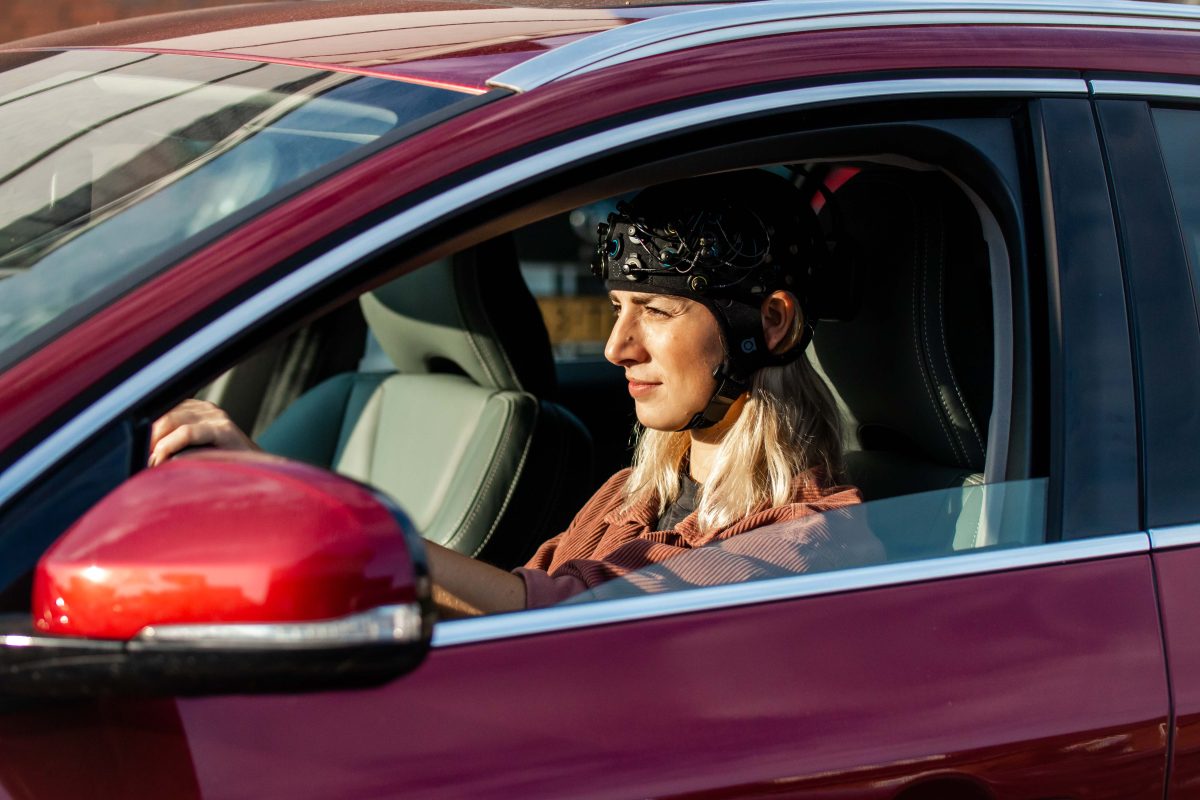
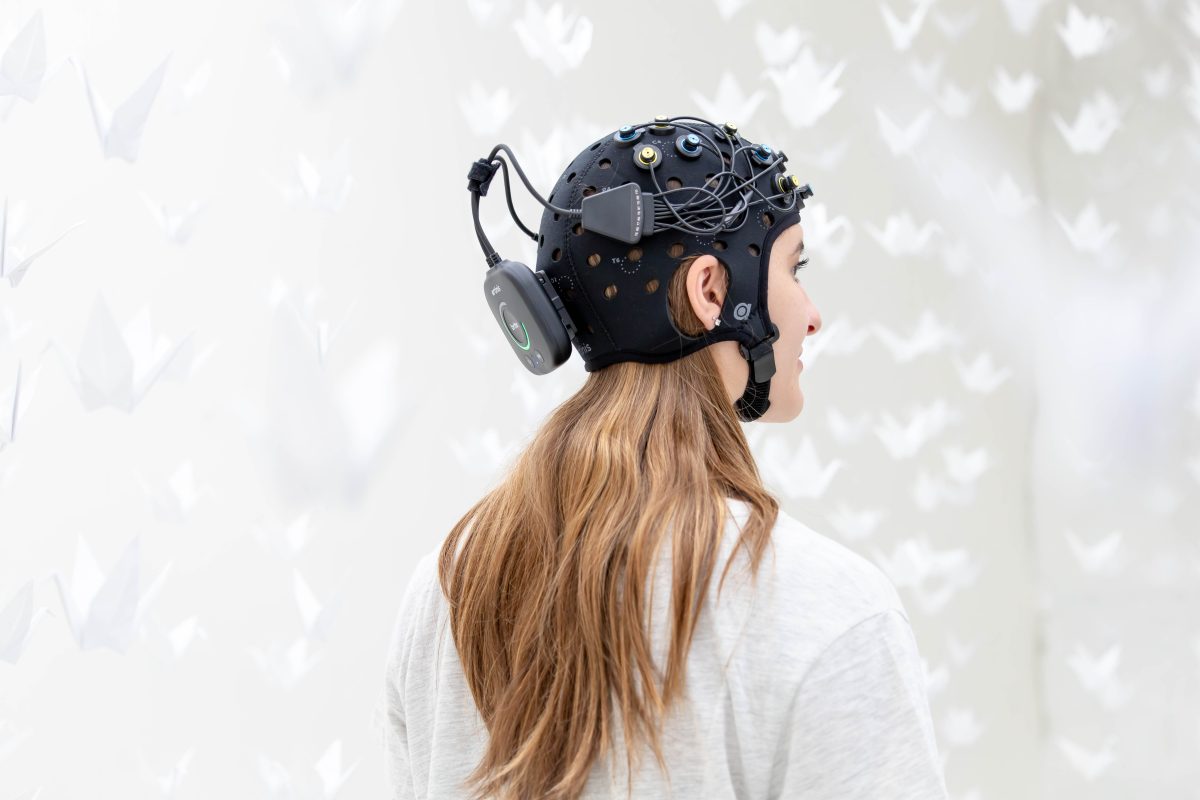

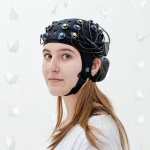
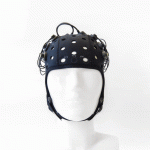
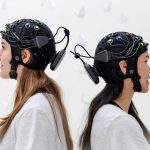

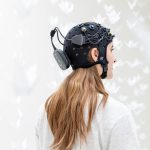
The Brite MKIV is a state-of-the-art, wearable, and flexible multi-channel fNIRS device designed for advanced brain oxygenation research. Weighing just 300 grams, this ultra-light system can be easily attached to the Artinis fNIRS headcap, offering unmatched portability and comfort for diverse participants, including children and elderly individuals. Combined with offline data storage, the Brite is ideal for studies in any environment—labs, clinics, or even outdoors.
Equipped with advanced multi-wavelength light transmitters, the Brite MKIV provides continuous, real-time data seamlessly integrated into our user-friendly analysis software. Its innovative multi-power gain control includes four power levels and auto-power settings, ensuring optimal data quality across various skin tones, hair types, ages, and cortical distances. Including sensors with high sensitivity, setup is now easier and quicker, especially when measuring over hair.
| Technology | Continuous wave Near-InfraRed Spectroscopy (NIRS) using the modified Beer-Lambert law |
| RELATIVE MEASURES | Oxy-, deoxy-, and total hemoglobin concentration changes |
| CHANNELS | Up to 27 with one Brite, or up to 54 channels with DualBrite and 100+ channels with TetraBrite |
| SHORT SEPARATION CHANNELS | Short channels at 10 mm with multipower switch |
| TEMPLATE & LOCATION | Any template for brain (anywhere on the head) |
| INTER OPTODE DISTANCE | Recommended 30 mm (10-55 mm may be possible) |
| TRANSMITTERS | 10 LEDs, each with 2 wavelengths |
| RECEIVERS | 8 photodiodes |
| WAVELENGTHS | Standard 760 and 850 nm, custom wavelength possible |
| AMBIENT LIGHT CORRECTION | Proprietary algorithm to filter out ambient light |
| OPTODE HOLDERS | 3 available heights to improve skin contact |
| DIMENSION | Control Unit: 85x85x30 mm. Headcaps available in multiple sizes: kids version (from 2 years old) & adults (XS – XL) |
| TOTAL WEIGHT | 300 grams including battery and headcap |
| ENVIRONMENT | Operating temperature: 10 – 35 °C |
| INDICATORS | Power, measuring, battery status, Bluetooth |
| POWER | Up to 3 hours – extendable with our EverGo battery extension |
| SAMPLE RATE | Up to 150 Hz* |
| ORIENTATION SENSOR | 3-axis accelerometer and 3-axis gyroscope |
| DATA COLLECTION & STORAGE | Online, offline 100+ hours, automatic back-up of data |
| DATA ACQUISITION & ANALYSIS SOFTWARE | OxySoft: including 3D extension and lab streaming layer (LSL); Brite Connect |
| OPERATING SYSTEM | Windows 11 |
| EVENTS | Online, offline or PortaSync |
| ELECTROMAGNETIC COMPATIBILITY | Compatible with TMS, EEG, EMG, ECG |
| HARDWARE SYNC OPTIONS | PortaSync, parallel cable, serial cable, LabStreamer |
| SOFTWARE SYNC OPTIONS | LSL, DCOM (e.g. Matlab, E-prime, Presentation) |
| NIRS + OTHER MODALITIES | We deliver the following packages: Brite + TMSi EEG package (24, 32, 64 channels, etc.) – Brite + Enobio EEG package (8 channels and other options available) – Brite + tES (STARSTIM) |



Read publications made possible with iMotions
Get inspired and learn more from our expert content writers
A monthly close up of latest product and research news