Affectiva SDK
Incorporate Real-Time Emotion Sensing In Digital Experiences and Applications
Develop Emotion Sensing Solutions with Affectiva SDK
Affectiva SDK is the industry-leading solution for real-time facial expression analysis, enabling businesses, researchers, and developers to decode human emotions with precision. Leveraging deep learning models trained on thousands of diverse participants, Affectiva SDK provides highly accurate emotion detection, outperforming competitors in real-world conditions.
Whether you’re conducting ad testing, user experience research, driver monitoring, or healthcare studies, Affectiva SDK delivers scalable, cross-platform Facial Coding AI that integrates seamlessly into your workflow.
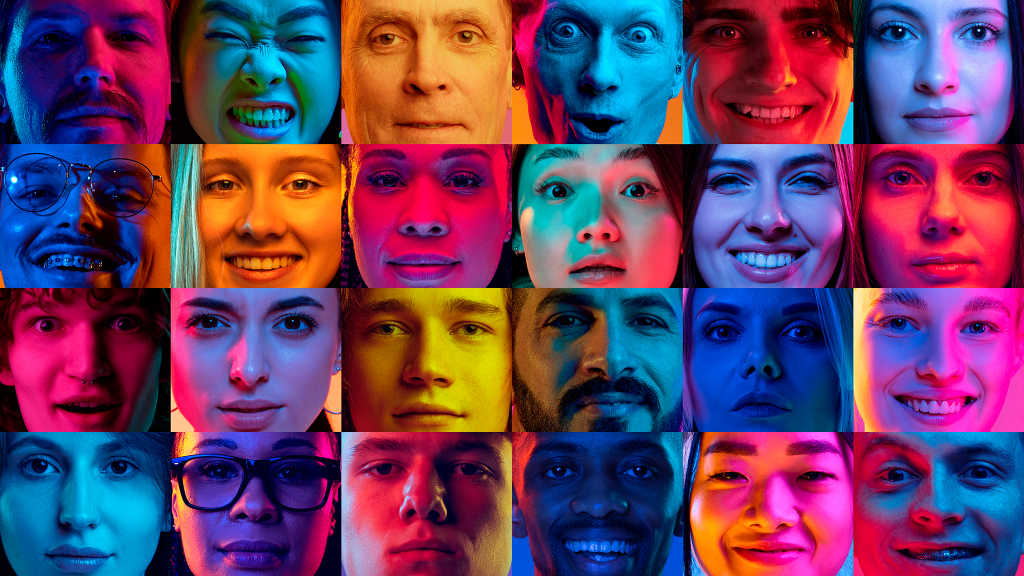
Comprehensive Data Set
19M
Faces
10B
Facial Frames
90
Countries Represented
What it can do

Facial Expression Analysis from any video source
Embed into your own application
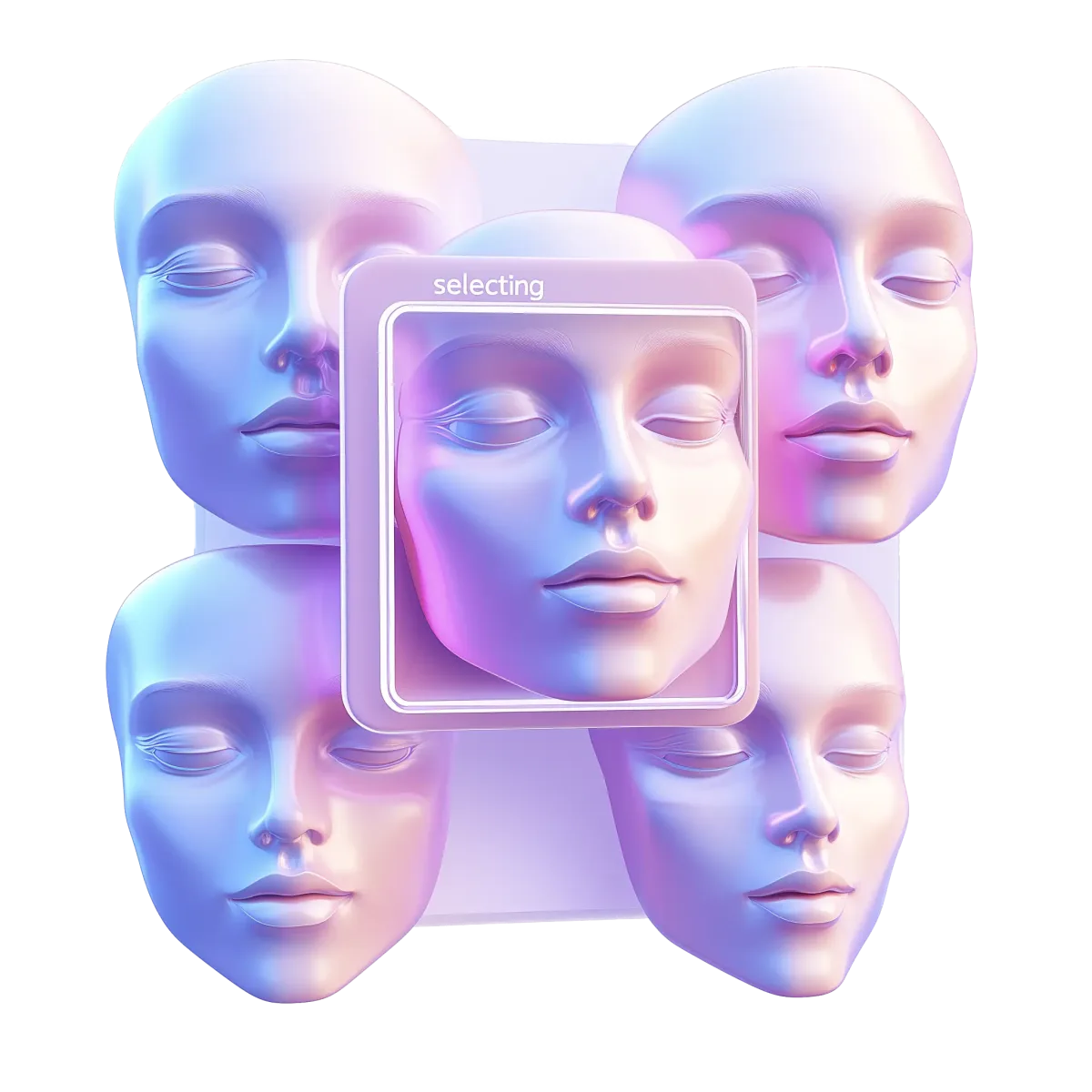
Detect and analyze multiple faces simultaneously

Speaker detection for video conferences

Real-time and post-processing options

Mobile Supported with native Android SDK
Why Choose The Affectiva SDK Over Competitors?
🔹 NEW! Android SDK – Affectiva SDK now supports Android natively and brings the 5.x model to Android. This opens up for a wide range of new applications and enables full privacy and zero server bills as all compute happens at edge on the users device.
🔹 NEW! Pain and Yawn metrics – The Pain metric detects distinct, objective facial expressions of pain/discomfort, which can be used to explore “cringe” and “hard-to-watch” moments in dramatic or provocative content. The Yawn metric provides real-time tracking of 29 facial signals to isolate jaw and mouth movements, ideal for detecting fatigue, boredom, or drops in attention.
Who Uses Affectiva SDK?

Marketing and Advertising
Optimize ad engagement, emotional impact, and brand perception with emotion- driven insights.

User Experience & HCI Research
Enhance digital experiences by understanding user frustration, satisfaction, and engagement.

Automotive & Driver Monitoring
Detect driver drowsiness, distraction, and emotional states for safer road experiences.

Healthcare & Mental Health Applications
Support patient diagnostics, therapy monitoring, and psychological research with facial expression analysis.

Academic & AI Research
Train machine learning models with robust facial expression datasets, improving AI-human interaction capabilities.














Get Started with Affectiva SDK
Ready to integrate real-time facial expression analysis into your projects? Contact iMotions today to discuss licensing options, integration support, and custom solutions tailored to your needs.
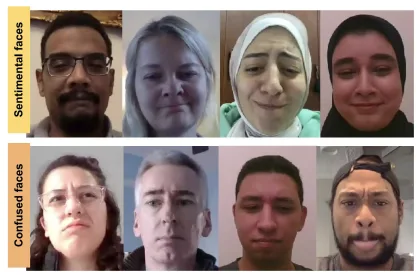

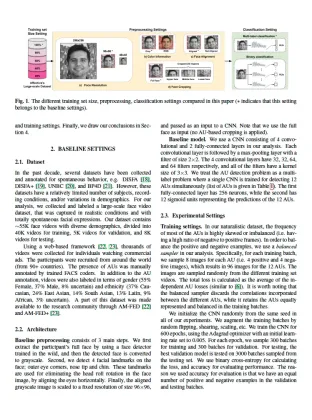

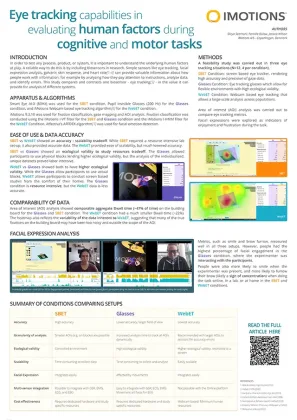

Technical Requirements and License Options
Platform support
Android
Windows 10 (x86) with Visual Studio 2019
Ubuntu 24.04lts x86_64 with GCC 13.2
Hardware
There are no special requirements for processing power or a GPU,
A RGB video source (minimum 640×480 resolution).
Licenses
Commercial and development license.
Academic license with attractive pricing for annual renewals.
Related Solutions
Affectiva Facial Coding API
Looking to batch process videos? Then the Facial Coding API is a cost effective and easy solution where you only pay for the minutes you use.
Affectiva Media Analytics
Optimize content and media spend by measuring consumer emotional responses to videos, ads, movies and TV shows – unobtrusively and at scale.
iMotions Lab
Combine Facial Expression Analysis with eye tracking, EEG or EDA for multimodal human behavior research.
Science Resources
Affectiva Facial Coding AI in academic research
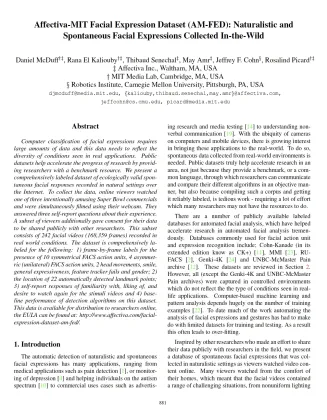
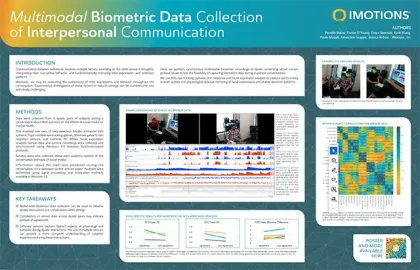
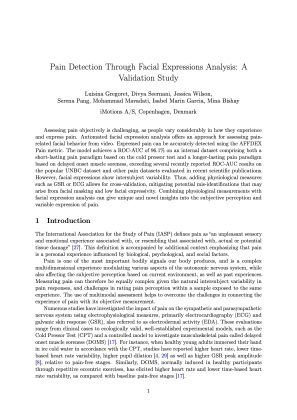
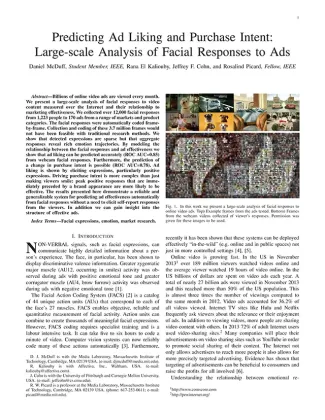
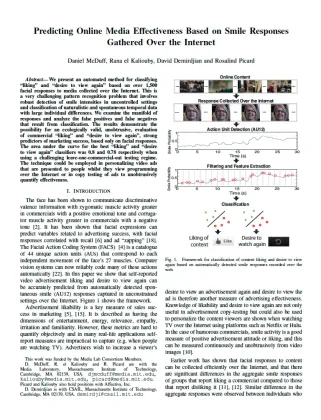
Affectiva’s facial coding AI is widely used in academic research, and is regarded as the gold standard for automated facial coding.
-
2026 Gated
The Influence of Tutor Engagement, Attention, and Positive Emotions on Student Achievement
Vanderbilt University
-
2026 International Journal of Hospitality Management Gated Peer-Reviewed
Designing smart menus: A multi-method exploration of AI integration in hospitality guest experience and operations
Isenberg School of Management + 1 more
-
2026 International Journal of Human–Computer Interaction Open Access Peer-Reviewed
Technostress-Aware Integrated Development Environments (TIDEs): A dataset for exploring technostress during programming
Birmingham City University + 1 more
-
2026 Behavioral Sciences Open Access Peer-Reviewed
Changes in Emotional and Vocal Expression in Job Interview Simulations with an AI-Enhanced Chatbot for University Students
Universidad Privada Boliviana
-
2026 Behavioral Sciences Open Access Peer-Reviewed
Changes in Emotional and Vocal Expression in Job Interview Simulations with an AI-Enhanced Chatbot for University Students
Universidad Privada Boliviana
-
2026 Machine Learning with Applications Open Access Peer-Reviewed
Facial morphology-based autism screening during attention assessment tasks: A dual-branch deep learning approach
Hamad bin Khalifa University + 1 more
-
2026 Scientific Data Open Access Peer-Reviewed
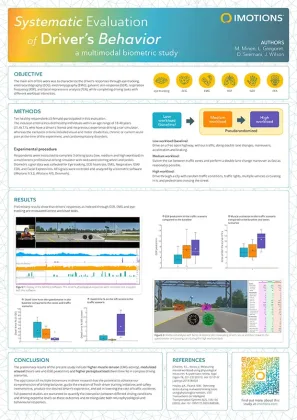
A Multimodal Dataset of Psychological, Physiological, and Behavioral Responses in Diverse Driving Scenarios
Hong Kong Polytechnic University
-
2026 Interactive Learning Environments Open Access Peer-Reviewed
Mathematics anxiety through the lens of engagement in learning: a multimodal analysis
Tel Aviv University
-
2026 arXiv (Cornell University) Open Access Peer-Reviewed
Interpretable Multimodal Classification with Linear Discriminant Tree Ensembles
-
2026 PLOS One Open Access Peer-Reviewed
Divergence between facial expressions and self-reported emotions: Sex differences in responses to video-based emotional stimuli
Korea Institute of Oriental Medicine + 1 more