



iMotions Blog
Learning
Studies using
Best Practice



Guides and tutorials



Research Fundamentals




Product News



Getting Started With Eye Tracking


Latest Articles
-

Multimodality in iMotions Software: A Complete Guide to Synchronized Biosensor Research Across iMotions Lab, Online, Education, and Media Analytics
-
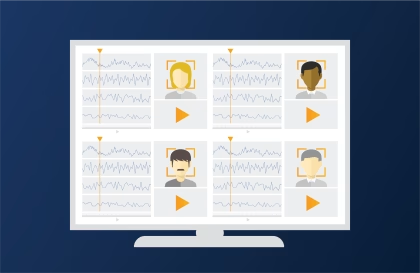
3 ways Multi-Respondent View Makes Data Analysis Easier
-

4 Neuromarketing Research Setups Using iMotions Lab: From Beginner to Advanced
-

iMotions Academy Recap: Copenhagen October 2025
-

5 Best VR Headsets with Eye Tracking for Scientific Research (2026 list)
-

iMotions 11: Two Decades of Innovation – Built for What Comes Next
-

Full-Scale Human Behavior Research Solutions: A Comprehensive Guide
-
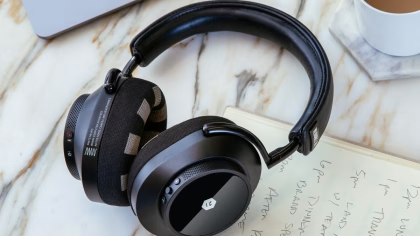
Introducing the Neurable EEG Headset – Everyday Neurotechnology
-

Eye Tracking Accuracy: How It is Measured
-

iMotions’ 4 Behavioral Categories Explained
-

Heart Rate Variability – How to Analyze ECG Data
-
The International Affective Picture System- IAPS [Explained and Good Alternatives]
-

Integrating the California Verbal Learning Test (CVLT) with iMotions Lab: A Multimodal Approach to Verbal Memory Assessment
-

fNIRS vs EEG: Comparing Non-Invasive Brain Imaging Techniques
-

iMotions Remote Data Collection: Break The Boundaries For Your Research
-

RDC Study: How to Use Surveys and Biometrics Together
-

Remote Behavioral Research Sample Study: Featuring iMotions’ Remote Data Collection
-

Elevate your Behavioural Research: How Accelerometry Adds a New Dimension to Your Data
-
What Part of the Brain Controls Emotions? Discover the Science Behind Emotional Regulation
-
The Implicit Association Test (IAT)
Next academy
Publications
Read publications made possible with iMotions
Blog
Get inspired and learn more from our expert content writers
Newsletter
A monthly close up of latest product and research news
Achieving this holistic understanding necessitates platforms capable of synchronizing diverse data types to reveal deeper insights into cognitive processes. For a detailed exploration of how this can be practically applied, a recent study focuses on integrating the California Verbal Learning Test (CVLT) with iMotions, offering a robust, multimodal approach to verbal memory assessment.