From observing facial expressions to predicting human responses, how years of real-world research are helping us build a new generation of AI.
Table of Contents
There is no shortage of artificial intelligence that can recognize a face, detect a smile, or make a prediction about human behavior.
But how do we know when it’s right?
It’s a surprisingly difficult question. A smile doesn’t always mean happiness. A neutral expression doesn’t necessarily indicate indifference. And a model that performs remarkably well on carefully selected images may struggle when confronted with the unpredictable reality of people watching videos at home.
The challenge isn’t simply teaching AI to recognize patterns. It’s teaching it which patterns matter, when they matter, and how reliably they translate to the real world.
For more than a decade, Affectiva has been working on exactly this problem, developing facial-expression analysis technology from observations of real people responding naturally to advertisements and other media.
Today, that work has passed a significant milestone: more than 20 million face videos analyzed via our ad testing platform.
But the number alone isn’t what makes this interesting.
What matters is what those observations have taught us, and how they’ve helped improve the technology.
But more importantly, how the accumulated knowledge is beginning to enable something fundamentally different: predicting aspects of human behavior without necessarily having to measure them first.
What does it take to teach an AI human behavior?
One of the great challenges of facial-expression analysis is that people rarely behave like the examples in a textbook.
Expressions are subtle, fleeting, and highly individual. A person may smile while feeling uncomfortable, furrow their brow while concentrating, or watch an entire advertisement with very little visible facial movement.
Then there are the practical challenges. Different camera qualities, lighting conditions, head positions, glasses, mobile devices held at an angle, and partial obstructions can all affect what an AI is able to observe.
A model that recognizes exaggerated expressions in a controlled environment has solved a very different problem from one that reliably detects spontaneous facial movements in everyday conditions.
And just as importantly knows when there is no possible way of getting useful information out of the face detected. Or if what is detected is even a face in the first place.
This is why the data used to develop the technology matters so much.
The Affectiva human-response database
| 20M+ Face videos analyzed | 90+ Countries represented in published research |
| 55,000 Curated and human-annotated videos documented in AFFDEX 2.0 development | 70,000+ Advertisements in a recent predictive AI research corpus |
These figures represent different aspects and research subsets of Affectiva’s accumulated data.
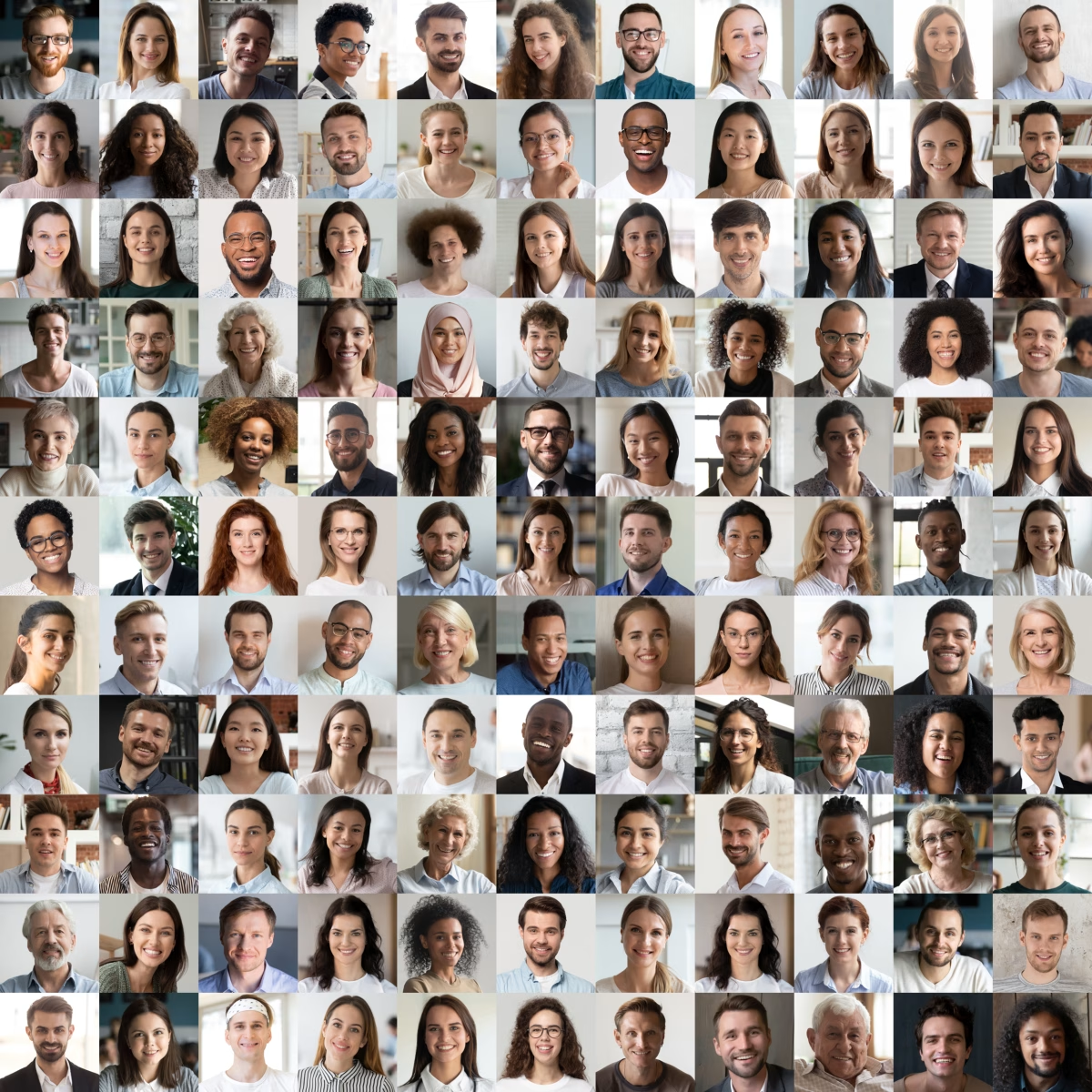
Rather than collecting people performing instructed expressions in a laboratory, much of Affectiva’s research has focused on spontaneous reactions to advertising, recorded using ordinary webcams.
In the development of AFFDEX 2.0, researchers used approximately 55,000 such videos, collected across more than 90 countries.
The videos were annotated for facial Action Units by trained Facial Action Coding System (FACS) coders. These annotations describe observable facial movements, such as raising the eyebrows, tightening the eyelids, or pulling the corners of the mouth.
This distinction is important. A facial movement is something we can observe and establish reference labels for. The emotional state behind it is an interpretation that requires considerably more context.
And while large amounts of data help expose models to natural variation, expert annotations, careful validation and a curated training set is what keeps the model from being weighted towards any demographic that happens to be over-represented in our emotion database.
This is why Affectiva uses a curated training set, which represents expression data from over 90 countries across the world.
Better AI means better performance for more people
The evolution from AFFDEX 1.0 to AFFDEX 2.0 illustrates what years of research and model development can accomplish.
Facial-expression analysis has historically faced a fundamental problem: systems that work well for some people and recording conditions do not necessarily work equally well for others.
A reliable model must generalize beyond the people and environments it was developed on.
AFFDEX 2.0 introduced new deep-learning-based face tracking and Action Unit detection, trained using naturalistic recordings spanning different demographic groups and recording conditions.
The results were measurable.
In a published comparison involving approximately 8,200 videos, average face-tracking performance increased from 91.3% to 94.6%, while average Action Unit detection ROC-AUC improved from 0.84 to 0.88.
| Performance measure | AFFDEX 1.0 | AFFDEX 2.0 |
| Face tracking | 91.3% | 94.6% |
| Facial Action Unit detection (ROC-AUC) | 0.84 | 0.88 |
Source: Bishay et al., AFFDEX 2.0: A Real-Time Facial Expression Analysis Toolkit. The two rows use different evaluation metrics.
But perhaps the most meaningful improvements were found when the researchers examined performance across demographic groups.
Improving accuracy across demographics
| Ethnicity | Face tracking improvementAFFDEX 1.0 vs AFFDEX 2.0 vs | Action Unit detection improvementAFFDEX 1.0 vs AFFDEX 2.0 vs |
| African | +8.6 pp | +9.4 pp |
| Caucasian | +3.7 pp | +3.4 pp |
| East Asian | +2.4 pp | +3.1 pp |
| Latin | +1.9 pp | +2.0 pp |
| South Asian | +4.2 pp | +7.9 pp |
Source: AFFDEX 2.0 (Bishay et al., 2023), Table I. Demographic categories follow the original research.
The improvements were particularly substantial for some groups where the previous generation had performed less reliably.
For example, the difference in Action Unit detection performance between African and Caucasian participants narrowed from 6.6 percentage points to just 0.6 percentage points.
And the best news is that the increase in accuracy performance has not come at the expense of heavy computing needs. You can run AFFDEX 2.0 real-time through the Affectiva SDK on a smartphone, with no need for server processing. This is what processing 20 million face videos gives you, a model that is optimized for its job, opening up for privacy preserving applications of facial expression data at the edge.
From observing reactions to predicting them
For years, the fundamental approach to advertising research has remained much the same.
Show people an advertisement. Observe their responses. Ask them what they think. Compare the results.
Technology has made this process faster, more scalable, and more detailed, but it still depends on recruiting people and collecting their responses.
What if some of those observations could help us anticipate responses to entirely new advertisements?
This is where the accumulated human-response data becomes particularly interesting.
Instead of using AI only to recognize facial movements in recorded videos, researchers can train new models to learn relationships between the advertisements themselves and the audience responses previously observed.
The result is a shift from measuring what happened toward estimating what might happen.
Predicting reactions without a new audience study
The scientists at Affectiva have developed a multimodal approach to predicting audience-level responses directly from advertising content.
Their research uses a corpus of more than 70,000 professionally produced advertisements collected between 2014 and 2025, associated with millions of recorded viewer-response sessions.
The model examines several aspects of an advertisement:
- Visual content: The scenes, imagery, and visual information presented.
- Audio: The soundtrack and other audible features.
- Language: Spoken content and accompanying contextual information.
- Market context: Information such as country and product category.
By learning from historical audience measurements, the model attempts to predict aggregated engagement, valence, and attention metrics for advertisements it has never encountered before.
In evaluations on held-out advertisements, the research reports an average Pearson correlation of approximately 0.78 between predicted and measured summaries across seven targets.
That’s a promising result, but it’s important to understand exactly what it means.
The model is learning to predict audience-level measurements derived from facial analysis. It does not tell you if the messaging is clear or that the brand will be remembered.
A marketer developing twenty variations of an advertisement might use predictive models to identify unusual response patterns or shortlist promising candidates, while reserving direct audience research for the decisions that warrant it. And because a predictive AI result can be produced within minutes of finishing an edit or concept video, creatives can even test their different versions and shortlist the ones which produce the desired results.
If the ad is funny, valence should be high. If the ad is intended for SoMe and online attention should be high, and in general expressiveness can tell you how much it moved people emotionally.
This is an important change in how we think about measurement. Instead of asking whether everything can be predicted, we can ask which questions already have enough supporting evidence—and which still require observing real people.
Research reference: Screening Ads Without Viewers: A Region-Adaptive Multimodal Predictor of Ad-Level Expressiveness. Research manuscript; publication status and final results to be confirmed.
The next generation: understanding behavior without specialized sensors
The development of predictive AI is only one illustration of a broader change taking place in human behavior research.
For decades, measuring aspects of human behavior has often meant bringing participants into specialized environments, fitting them with sensors, or requiring carefully calibrated equipment.
Increasingly, computer vision and machine learning are challenging some of those requirements.
At iMotions and Affectiva, new technologies are being developed that explore what can be measured—or reasonably estimated—using ordinary cameras and AI.
Calibration-free webcam eye tracking aims to reduce the friction traditionally associated with gaze measurement, opening possibilities for studies outside dedicated laboratory environments. Read more here.
Webcam respiration measurement investigates whether subtle visual signals can provide useful estimates of respiratory activity without attaching physiological sensors. Read more here.
Predictive eye tracking takes a different approach: rather than measuring where a particular participant looks, it estimates where viewers are likely to direct their visual attention.
These are different technical problems, relying on different types of data and requiring their own validation. They do not all emerge directly from Affectiva’s facial-expression dataset.
But they reflect a common development: learning increasingly sophisticated relationships between observable human behavior, visual information, and the measurements we want to understand.
And they challenge an assumption that has shaped behavioral research for decades.
What if the next major advance in human behavior research isn’t a more sophisticated sensor, but understanding when we no longer need one?
That doesn’t make direct measurements obsolete. It changes the questions we should ask before collecting them.
When is an inexpensive estimate good enough? When does individual variation make direct measurement essential? And which research questions cannot yet be answered reliably without observing real people?
These questions are becoming as important as the technology itself.
The responsibility that comes with prediction
There is an understandable temptation in AI development to reduce progress to a handful of impressive numbers: dataset size, model accuracy, benchmark rankings.
But human behavior isn’t a problem that can be solved by maximizing a single metric.
An AI model may recognize a facial movement accurately without understanding what caused it. It may predict an audience-level response while performing less reliably for an individual viewer. And it may reproduce historical patterns without explaining why those patterns occurred.
The stronger AI becomes, the more important these distinctions become.
At iMotions and Affectiva, scientific validation is a central part of developing new models and technologies. Research publications describe model architectures, datasets, evaluation methods, and performance limitations, making it possible for others to examine the evidence behind our claims.
This includes testing against external research datasets, examining performance across demographic groups, and evaluating whether new models generalize beyond their development environments.
It also means recognizing that model-generated labels are not equivalent to independent human annotations, and that predicted measurements are not automatically validated behavioral outcomes.
A large human-response database creates opportunities for innovation. It doesn’t remove the need for sound methodology, independent evaluation, informed consent, responsible data governance, or continued scientific scrutiny.
Trust in AI shouldn’t come from how confidently a system makes its predictions. It should come from how rigorously those predictions have been tested.
The next 20 million
Twenty million analyzed face videos represent an extraordinary accumulation of observations of people responding to real content.
But the most interesting part of this story is not the number we’ve reached.
It’s the progression it represents.
From detecting facial expressions to improving how reliably we detect them across populations. From measuring audience responses to learning which aspects of those responses can be predicted. And from specialized measurements toward technologies that may make some forms of human behavior research simpler and more accessible.
The next generation of AI won’t be defined by the amount of human data it has encountered alone.
It will be defined by what it has learned from that data, how reliably those lessons apply beyond the original observations, and whether they help us answer meaningful questions about the world.