

Abstract: In this study, we compare haptic feedback and nonhaptic feedback conditions in which virtual characters bump into the participant who is immersed in a virtual environment. A questionnaire was developed to determine the influence of haptic feedback on a number of concepts (presence, embodiment, positive and negative affect, interaction realism with virtual character, and haptic feedback realism). Physiological data were also collected using galvanic skin response (GSR) to investigate the influence of haptic feedback on physiological arousal during human–virtual character interaction. Five conditions were developed (no haptic feedback, full intensity, half intensity, incorrect position, and delayed timing) to determine which aspects of haptic feedback are most important in influencing participant responses. Significant differences were found in embodiment, realism of virtual character interaction, and haptic feedback realism. In addition, significant differences were found in GSR amplitude after the first interaction with the virtual character. Implications for further research are discussed.

Related Posts
-

How to Study Indoor Wayfinding: What People Notice, Where They Struggle, and What to Measure
-

Human-in-the-Loop Digital Twins: How Real-Time Biosensor Data Is Transforming Simulator Research
-
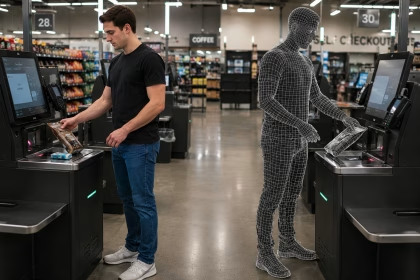
Digital Twins in Consumer Research: Validating Synthetic Behavior with Biosensors
-

What Happens in Flow, and How Do We Capture It?