Abstract
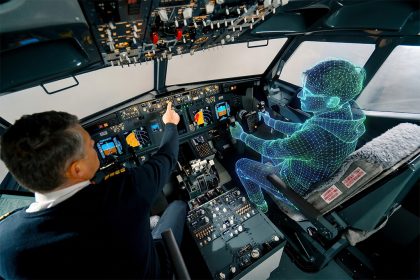
As e-commerce and urban deliveries spike, there is an increasing demand for curbside loading/unloading space. However, commercial vehicle drivers face numerous challenges while navigating dense urban road networks. These challenges can lead to conflicts with other road users, congestion, illegal parking, and parking time violations. While existing research often highlights pedestrian and bicyclist safety in urban environments, far less attention has been given to the experience and perspective of the truck drivers themselves, who are central to urban goods movement. Moreover, previous research on how commercial vehicle drivers make choices about when and where to park is limited. Available data often comes from field studies where only limited situations can be observed, with no experimental controls and a lack of known drivers’ characteristics. To address this gap, this study used the Oregon State University heavy vehicle driving simulator to examine the behavior of commercial vehicle drivers in various parking and delivery situations while accounting for key variables. A fully counterbalanced, partially randomized, factorial design was chosen to explore four independent variables: number of lanes (2-lane and 4-lane roads), with/without bike lane, available/unavailable passenger vehicle parking, and commercial vehicle loading zone (none, occupied, and unoccupied CVLZ). Driver speed, eye tracking, and parking behavior were used as performance measures. Data from 33 commercial driver’s license (CDL) holders yielded 792 observations across 24 scenarios. The findings from speed, eye movement, and parking behavior support more effective curb management strategies that improve delivery efficiency while recognizing the operational problems faced by truck drivers.