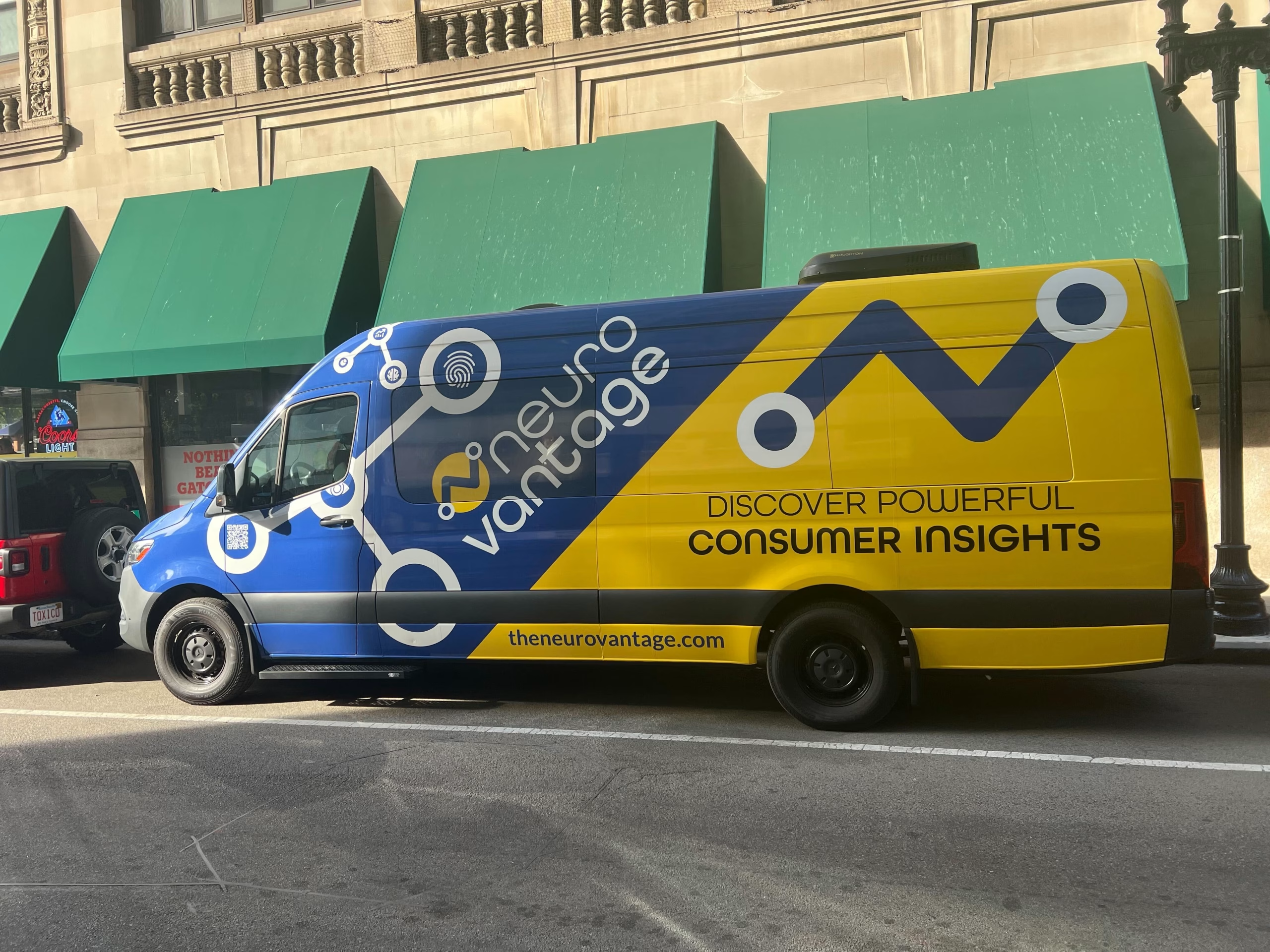
Picture a van pulling into the parking lot of a community center in Northeast Ohio. Inside, a stay-at-home mother settles in for a research session. Her children play nearby in the coffee shop’s play area. On-screen, she navigates a website. Sensors track where her eyes move, how her face responds, whether her body registers stress or ease — all in real time. She never had to travel to a research facility. The facility came to her.
That is the idea behind Neurovantage and its NeuroVan – an innovative way of deploying iMotions’ powerful behavioral research platform to gather insights from audiences who can be challenging to reach. And it’s already delivering measurable results for customers, generating insights that have improved advertising performance and website conversion.
Table of Contents
Founded in Wooster, Ohio in early 2026 by Shon Christy, Neurovantage is believed to be the first mobile human behavior research lab, featuring a suite of iMotions technologies, including eye-tracking, galvanic skin response (GSR), facial expression analysis, and sentiment analysis.
The value proposition is straightforward: those who organizations often need to reach and understand can be some of the hardest to get into a traditional lab. Tradespeople and shift workers. Stay-at-home parents. People without reliable transportation. City officials, C-suite executives, healthcare professionals, manufacturing leaders, and financial advisors. Each manages a combination of full schedules, competing demands, and little incentive to travel to a research facility during business hours. The NeuroVan removes that barrier entirely.
A Case Study in Understanding
Organizations across Ohio are tapping into this to generate behavioral insights that have informed changes that dramatically increased marketing performance. One of those was a healthcare nonprofit looking to grow its membership – particularly among stay-at-home moms and blue-collar workers – two audiences traditionally difficult to engage in research. Aware that traditional survey data could tell them only so much, the organization engaged iMotions-powered Neurovantage to conduct two neuroanalytics studies: one analyzing digital advertising creative across formats, and a second examining the end-to-end website experience.
What the advertising study revealed
Eye-tracking data told an immediate story. The organization’s logo was being visually overlooked in its advertising. It was competing for attention with models and background props and losing, at a cost to brand visibility and recall. Study data and insights pointed to changes, so the organization added borders and boxes around the logo and repositioned it to reduce visual competition and fit within the image flow. They were small design changes, based on insights that could not have been uncovered with traditional research methods.
Additionally, sentiment analysis on a 22-second video revealed that 91% of participants maintained neutral emotional states throughout. Neutral implies brand safety, but it does not generate the emotional resonance needed to move people from awareness to consideration. That finding opened a direct conversation about deepening the emotional dimension of the content strategy.
Neutral implies brand safety, but it does not generate the emotional resonance needed to move people from awareness to consideration
What the website study revealed
The website findings pointed to friction at nearly every stage of the decision journey. Users needed clearer pathways to understand the organization’s benefits and how it differed from others. Call-to-action buttons labeled “Join Now” and “Enroll Now” appeared too early in the user journey, before visitors had enough information to make a decision. Participants described them as feeling aggressive, and the data revealed stalling engagement.
The recommendation: softer CTAs early in the journey, with more direct calls to action reserved for moments when users were already engaged with stories and testimonials. The blog section, previously labeled “Health and Wellness,” was generating friction through negative association. Renaming it simply “Blogs” improved navigation clarity. Excessive pop-ups were frustrating users and were subsequently removed. Filtering member stories by occupation and life stage was recommended to help visitors find relevant voices faster, building the trust necessary to move forward.
The Results
After implementing the recommendations from both studies, the numbers shifted meaningfully.
- Homepage-to-content click-through rates rose from 7.5% to 9.1%
- Meta campaign reach grew from 4.88 million to 5.77 million, a more than 18% increase
- Top-performing campaigns generated an additional 95,934 link clicks and 70,280 landing page views compared to the prior year
- The organization is now moving forward with further studies to identify additional ways to improve performance
Modern marketing moves fast, fragments across channels, and reaches audiences that traditional research was never designed to study. Surveys and focus groups cannot tell you where someone’s eyes landed on a Meta ad, whether a homepage made them hesitate, or what a 22-second video actually made them feel. That gap between what organizations think is working and what is actually driving behavior has never been more costly. Or more solvable.
Neurovantage and iMotions close that gap. By bringing enterprise-grade behavioral science directly to the audiences that matter most, particularly those who were never going to show up at a research facility, this combination of technology and delivery turns real human responses into real competitive advantage. For the organizations that have already experienced it, the results speak for themselves.