



Abstract: Simulator-based training platforms have become increasingly popular on the grounds of their potential to facilitate skill acquisition within safe and controlled environments. However, current technology is limited in its ability to adapt to individual trainees. Tailoring is in fact typically based on recorded simulation inputs and outputs, or relies on costly and time-consuming trainer-driven interventions, as opposed to direct monitoring of trainee state. This research explores whether automated detection of trainee emotional state can be used to drive real-time changes to the simulator control. The present paper reports on preliminary work to establish the technical viability of such an intervention using current emotion detection technology within a state-of-the-art fixed-base driving simulator environment. Data on the accuracy of the emotion detection software supports the feasibility of the approach, thereby suggesting the possibility of implementing emotion-driven training trajectories bespoke to the needs of individual trainees.
Related Posts
-

Combatting Fraud in Online Surveys: What To Do When Your Respondents Aren’t Real
-
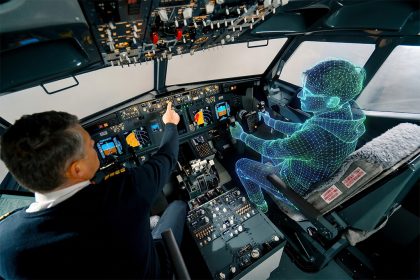
Human-in-the-Loop Digital Twins: How Real-Time Biosensor Data Is Transforming Simulator Research
-
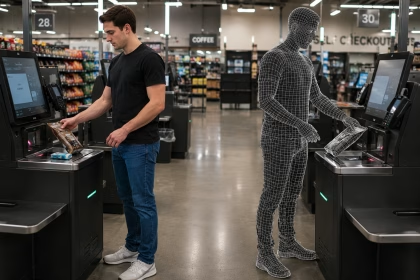
Digital Twins in Consumer Research: Validating Synthetic Behavior with Biosensors
-
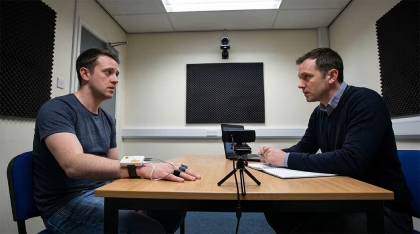
Forensic Science: Leveraging Human Behavior Research to Go Beyond the Crime Scene