

Abstract: Affect detection is a key component of intelligent educational interfaces that can respond to the affective states of students. We use computer vision, learning analytics, and machine learning to detect students’ affect in the real-world environment of a school computer lab that contained as many as thirty students at a time. Students moved around, gestured, and talked to each other, making the task quite difficult. Despite these challenges, we were moderately successful at detecting boredom, confusion, delight, frustration, and engaged concentration in a manner that generalized across students, time, and demographics. Our model was applicable 98% of the time despite operating on noisy real world data.


























Related Posts
-

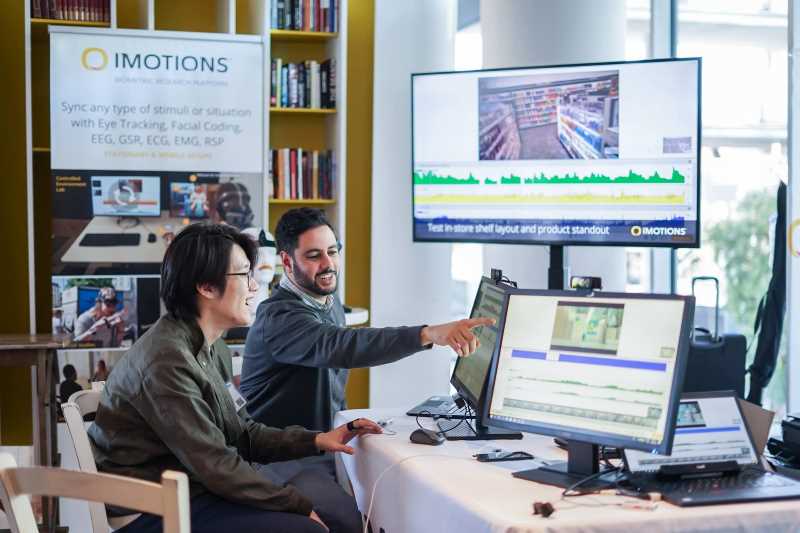
Multiface Analysis in Action: Advanced Methods for Studying Facial Expressions in Group Settings
-

Memory and Visual Attention: 5 Foundational Eye-Tracking Experiments
-

Converting Raw Eye-Tracking Data into Cognitive Load Indicators
-

Measuring Consumer Happiness: How Biometrics Can Help Assess What Products Make People Feel Good