Explore Hochschule Ruhr West’s Usability and Interaction Lab, where biometric research and mixed methods teaching bring human behavior to life. Discover how students use eye tracking, GSR, and facial analysis to bridge theory and real-world application in an open, hands-on learning environment.
Table of Contents
If you want to understand human behavior, you have to watch it unfold, not just ask people to describe it after the fact. That’s the basic tenet of the Usability and Interaction Lab (or UnI Lab) at Hochschule Ruhr West (HRW), a University of Applied Sciences in the very western part of Germany, and the very heart of the Ruhr District.
In many ways the Ruhr-West University exemplifies and embodies the strengths of a modern university. The focus centers on designing systems of education that align with how people actually live, learn, and work, and more importantly, are taught the skills that secure jobs after graduation.
Spearheaded by Professor Julia Thalmann, the Lab is part of a broader mission; to bridge academic learning and real-world inquiry using behavioral and biometric research.

In a time where data-driven decisions are expected of graduates entering the workforce, and user experiences are increasingly personalized, HRW is training students to measure, not just guess, what people see, feel, and do – bringing real, human-centered, value to an automated world.
This doesn’t mean that this lab is exclusive, high-stakes, or hidden behind locked doors. On the contrary, it’s designed to be open, adaptable, and accessible at every level of learning, from first-year bachelor’s students to PhD candidates and faculty researchers.
A Lab That Grows With You
Professor Thalmann describes the lab’s philosophy simply:
“We want every level of learning to have the opportunity to experience biometric research. If a bachelor’s student stops by, curious to try eye-tracking for the first time, they can. If a PhD student needs to run a full-scale experiment, they can. The Lab is created to grow with you.”
This adaptability goes much further than just being a slogan. The UnI Lab employs a genuine open-doors policy which means that any student and colleague can reserve time in the lab, get introduced to the equipment, and begin exploring.

Alongside Prof. Thalmann, research associate Dr. Maike Hübner completes the lab’s dynamic leadership duo. Together they provide hands-on training and support to ensure users not only access the tools, but know how to apply them responsibly and meaningfully.
A Mixed-Methods Approach
At the center of the Lab’s work is a combination of biometric tools provided by iMotions, including:
- Eye Tracking (attention and visual scan patterns)
- GSR (Galvanic Skin Response, to measure arousal)
- Facial Expression Analysis (for affective responses)
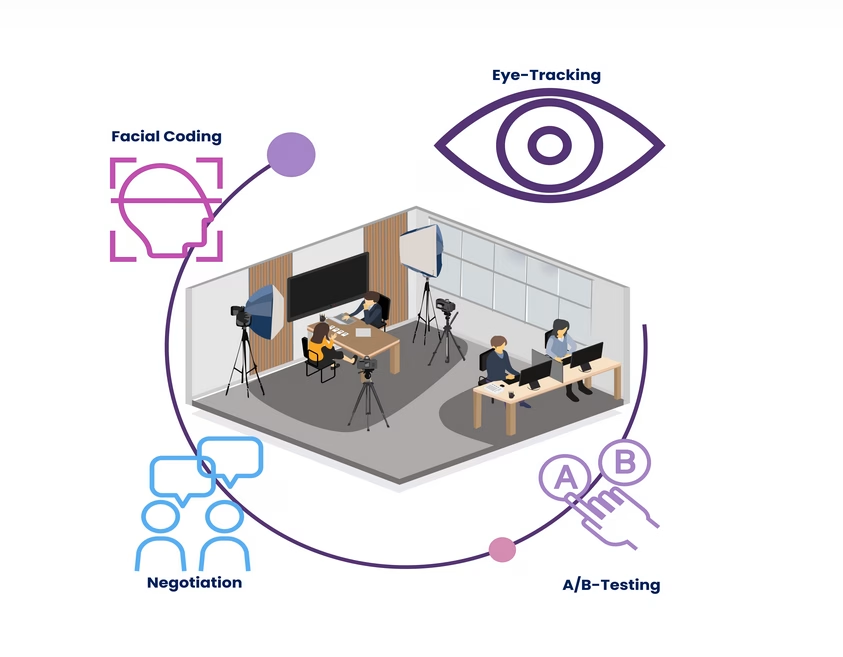
Together, these tools allow researchers to study real-time reactions to stimuli, from media content to product packaging to negotiation simulations. This is often paired with qualitative methods like retrospective interviews or surveys, to gain insight into how participants interpret or remember what they’ve experienced.
“I come from a quantitative background,” says Prof. Thalmann, “but I’ve come to believe the future of research lies in mixed methods, you need both the numbers as well as the story behind them.”
She emphasizes how important it is to understand not only what someone looked at or clicked on, but why they behaved that way, and how they explain it later, sometimes revealing gaps between automatic behavior and conscious reflection.
Teaching Behavioral Science, Actually
The Lab’s teaching model mirrors this progression:
- Undergraduate students begin with the basics: what is visual attention, how does eye-tracking work, how to interpret a heatmap. The emphasis is on visualizing behavior and formulating simple research questions.
- Master’s students go deeper into cognitive theory, user experience design, and bias-aware analysis. They often work on applied projects, such as testing advertising effectiveness or studying interface usability.
- PhD candidates use the full suite of iMotions tools to explore advanced, often multimodal questions, such as cross-cultural interaction, micro-expressions in decision-making, or emotional engagement with AI-generated content.
As Dr. Maike Hübner explains:
“For my own PhD research, I’m examining whether disclosure labels on social media ads are actually seen, and if so, what the behavioral impact is. It’s about milliseconds, subtle expressions, and what people remember afterward. Biosensors make the invisible visible.”
Technology That Works Behind the Scenes
One of the strengths of the Lab’s approach is not just the tools, but how they’re integrated. The iMotions software synchronizes all sensor data, so GSR, facial coding, and gaze patterns can be analyzed in parallel. This reduces technical barriers and makes it easier for students to get started, especially those who may be hesitant about using complex software.
“The interface is intuitive,” says Dr. Hübner. “It allows students to focus on asking good questions and interpreting results, not worrying they’ll break something.”
This is critical in an applied university where many students are first-generation learners or balancing academic work with jobs or caregiving. Remote access tools from iMotions allow them to collect data online, schedule hybrid lab sessions, or analyze results on their own time, thus making participation in research more inclusive and feasible.
The UnI Lab Setup: Two Zones, One Goal
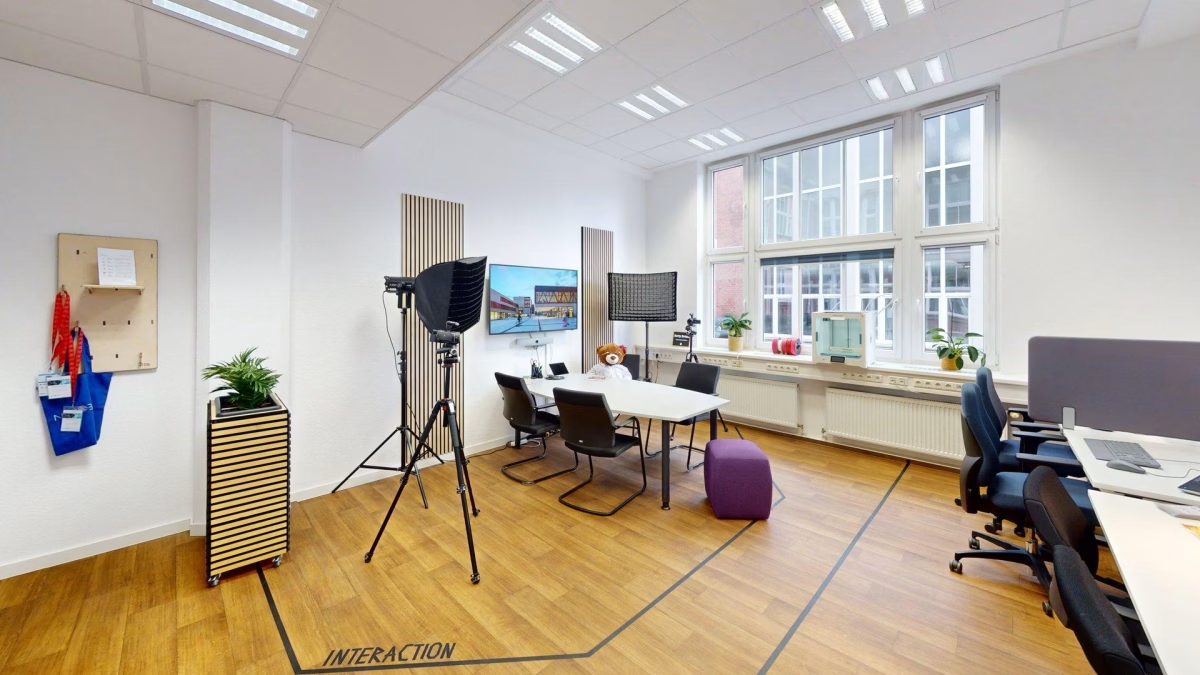
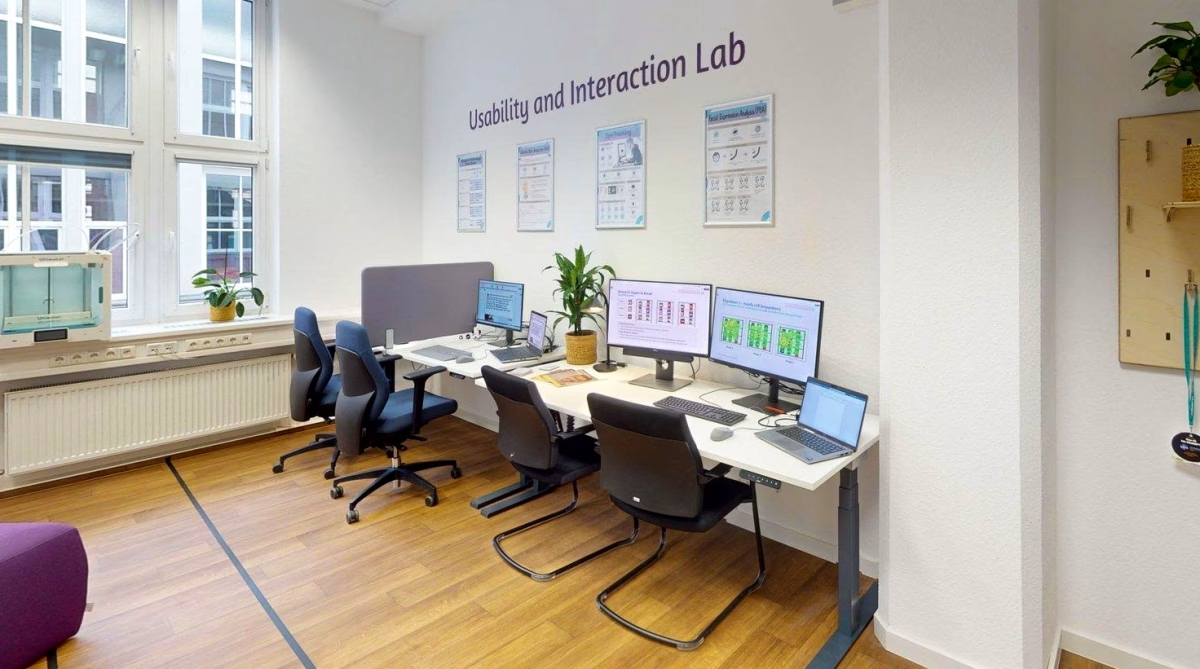
The physical space is organized into two complementary areas:
- The Usability Area: Focused on visual attention and emotional reactions to content, from retail packaging to website designs. Tools like eye-tracking and GSR reveal how people engage with the world around them.
- The Interaction Area: A more social space where behavior is studied in the context of communication, such as negotiation exercises recorded and analyzed for gestures, tone, and micro-expressions.
“Understanding behavior means looking at both stimulus response and interpersonal dynamics,” says Prof. Thalmann. “Both are necessary to prepare students for real-world complexity.”
Research Topics That Matter to Students
The Lab intentionally supports students engaging in research that they personally care about, rather than only faculty-driven agendas. This keeps engagement high and makes learning personal, meaningful, and engaging. Whether it’s about brands, technology, or social issues, students are encouraged to explore the real-world impact of human behavior research through topics that reflect their interests, such as:
- How minimalist vs. maximalist branding affects brand recall.
- Whether AI-generated influencers are perceived as trustworthy.
- How fans react to changes in sports team logos.
- The role of emotion in sustainability-focused advertising.
These projects often blur the lines between academic inquiry, marketing insight, and user-centered design, reflecting the interdisciplinary nature of human behavior research today.
Enter Betty Brown, Culture Carrier Extraordinaire
Science in general, and study participation specifically, can be intimidating, especially when it involves cameras, sensors, and social performance. That’s why the UnI Lab has its own soft-spoken ambassador, which comes in the form of Betty Brown, a large plush teddy bear with a CV as a “professional lab expert.” and an accompanying “professional lab expert” coat.
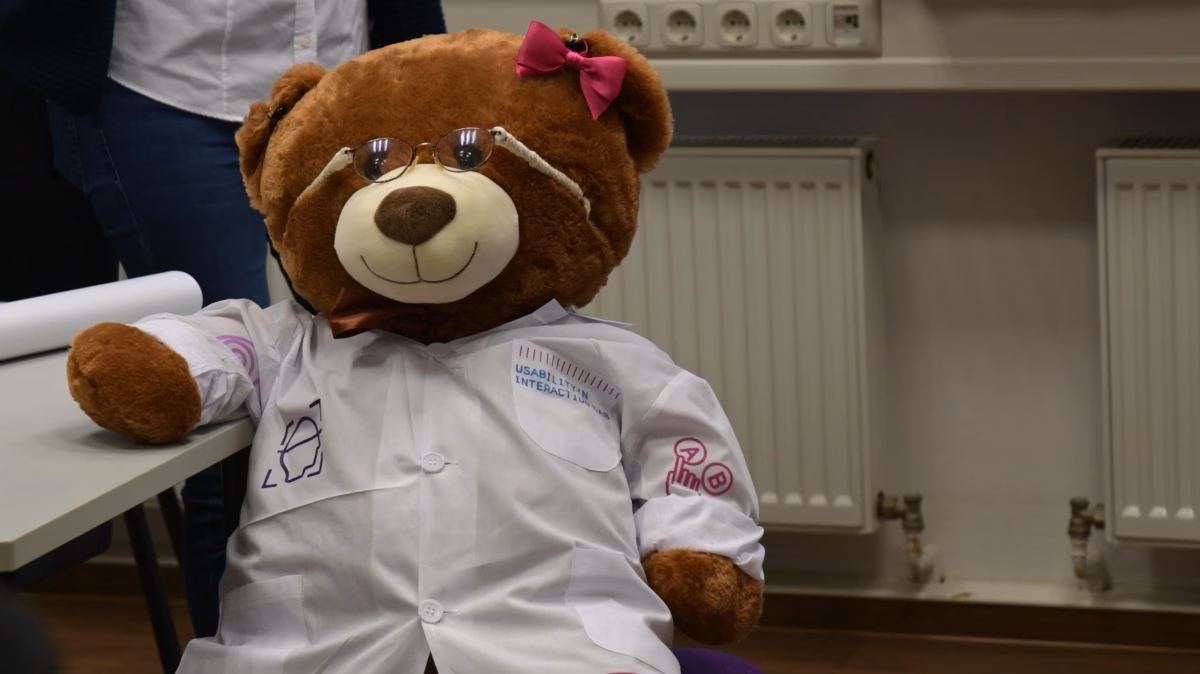
“She makes the lab feel approachable,” Dr. Hübner explains. “Especially for students trying biometric tools for the first time or stepping into a negotiation scenario. Betty lowers the barrier.”
It’s a small but telling example of the Lab’s approach, that scientific rigor doesn’t require sterility and formality. The human side of research, warmth, curiosity, social connection, is not an afterthought here. Rather, it is built into the design.
What Comes Next?
Both Prof. Julia Thalmann and Dr. Maike Hübner see the Lab as evolving in tandem with shifts in technology and society. Eye-tracking in VR environments is already being piloted.
Emotion-sensing tools in elder care or hospital settings are seen as promising new avenues to explore. And with AI playing a growing role in behavior analysis, ethical considerations around data interpretation and autonomy are coming to the forefront.
“We can’t lie about our behavior,” says Prof. Thalmann. “That’s why this work matters. But we also need to interpret it wisely, using both technology and empathy.”
Final Thoughts
The UnI Lab is not the biggest or flashiest research center. What makes it noteworthy is its intentionality: making behavior research tangible, teachable, and genuinely inclusive for everyone who walks through its doors. It’s a space where biometric data is demystified, theory is grounded in practice, and students are invited to explore not just what humans do but, more importantly, why we do it.