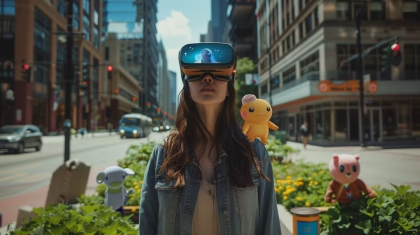

This article looks at five VR headsets with integrated eye tracking, all supported by iMotions. It compares their strengths in visual clarity, sampling rates, and research usability across fields like neuroscience, UX, and human factors. Ideal for labs seeking the right balance between precision, realism, and scalability in eye-tracking VR research.
Table of Contents
Virtual reality (VR) has long been a valuable tool in scientific research, with applications dating back over a decade in fields such as cognitive psychology, behavioral science, human factors, and ergonomics. As VR technology has matured, its adoption in research contexts has expanded significantly, offering controlled, immersive environments that enhance ecological validity while preserving experimental rigor.
What’s accelerating its relevance today is the improvements of eye tracking technology in VR headsets. This allows researchers to capture real-time visual attention data in dynamic, interactive settings, thus enabling deeper insights into perception, cognition, and behavior. As both VR and eye tracking hardware continue to improve in fidelity, usability, and integration, their use in research is not only well-established but poised for continued and growing impact across disciplines.
So, instead of relying on self-reports or traditional lab setups, researchers can now immerse participants in highly realistic environments and track, where they look, what they focus on, and how they react. This adds a whole new level of objectivity and ecological validity to scientific experiments.
And this is where iMotions steps in. As one of the leading platforms for biometric research, iMotions enables synchronized data collection from multiple sources, including eye trackers, facial expression analysis, EEGs, and more. When your VR headset is integrated with iMotions, it means you’re getting reliable, high-fidelity gaze data with accurate timestamps, without wrestling with plugins or workaround hacks.
But let’s be honest, not all VR headsets are built for this level of precision. That’s why we’re diving into the top 5 VR headsets with built-in eye tracking, each integrated with iMotions and proven to deliver the kind of data researchers can trust.
Ready to find the perfect VR headset for your lab? Let’s get into it.
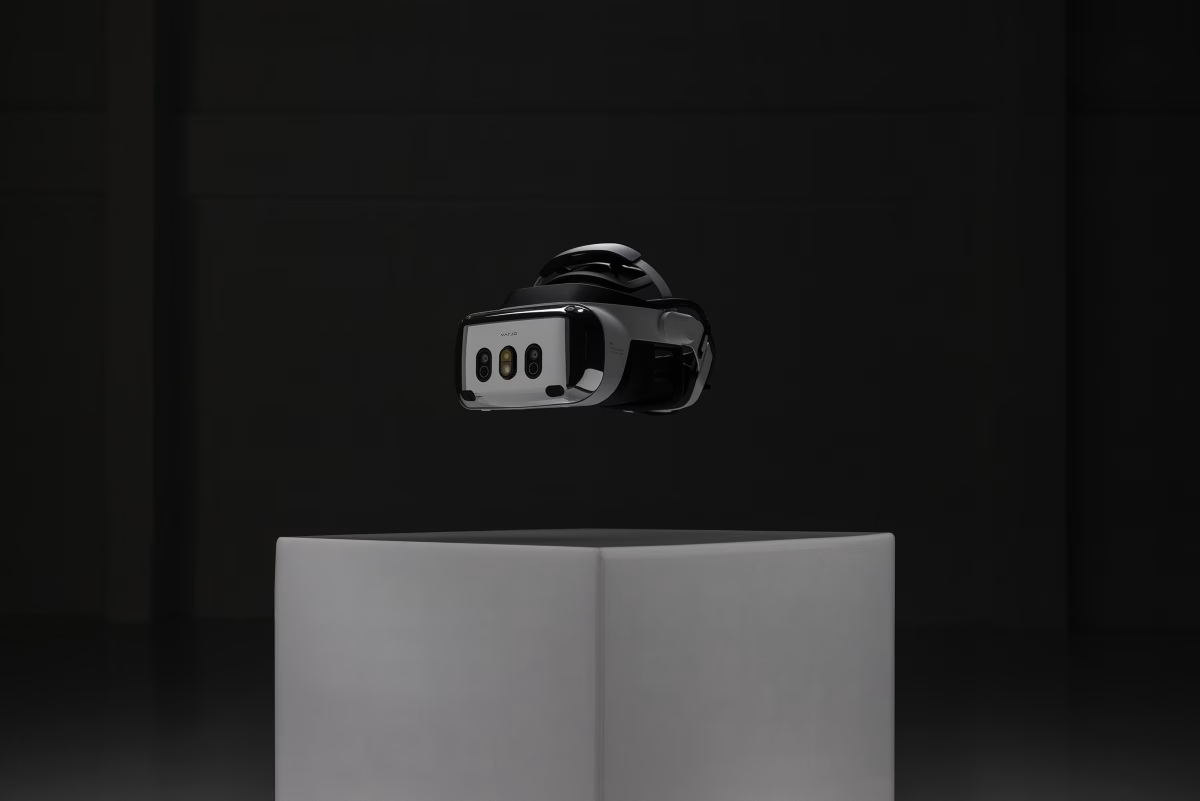
Varjo XR-4
Varjo XR-4: High-Fidelity Mixed Reality for Perceptual Accuracy
The Varjo XR-4 is purpose-built for high-precision mixed reality (MR) research, where visual realism, spatial accuracy, and ecological validity are central to study design. Its primary advantage lies in the superior optical fidelity and high-quality passthrough, enabling participants to engage with both virtual and real-world stimuli in a seamless, perceptually accurate manner.
The headset’s display clarity facilitates the perception of fine visual details, such as small text, subtle luminance differences, and intricate environmental cues that are often lost in lower-resolution systems. This contributes to reduced visual strain, minimizes participant refocusing, and enhances the quality of gaze data, particularly in experiments measuring visual attention, search behavior, or workload.
In mixed reality protocols, the XR-4 enables realistic interaction with physical objects while maintaining a stable virtual overlay, supporting tasks that demand depth perception and hand-eye coordination.
From a research standpoint, the XR-4 is particularly well-suited for studies where realism is critical to behavioral validity. Fields such as training transfer, ergonomics, safety behavior, and human-machine interaction benefit from environments that closely mimic real-world conditions, thereby eliciting authentic participant responses.
Operationally, the XR-4 requires a high-performance workstation, structured experimental protocols, and a controlled lab setting. It is not optimized for field research or high-throughput applications but excels in data-rich, controlled experiments where visual and behavioral precision are paramount.
Best suited for:
- Visual attention and UX in safety-critical domains
- High-fidelity mixed reality studies
- Training and simulation-based research
- Human factors and ergonomics
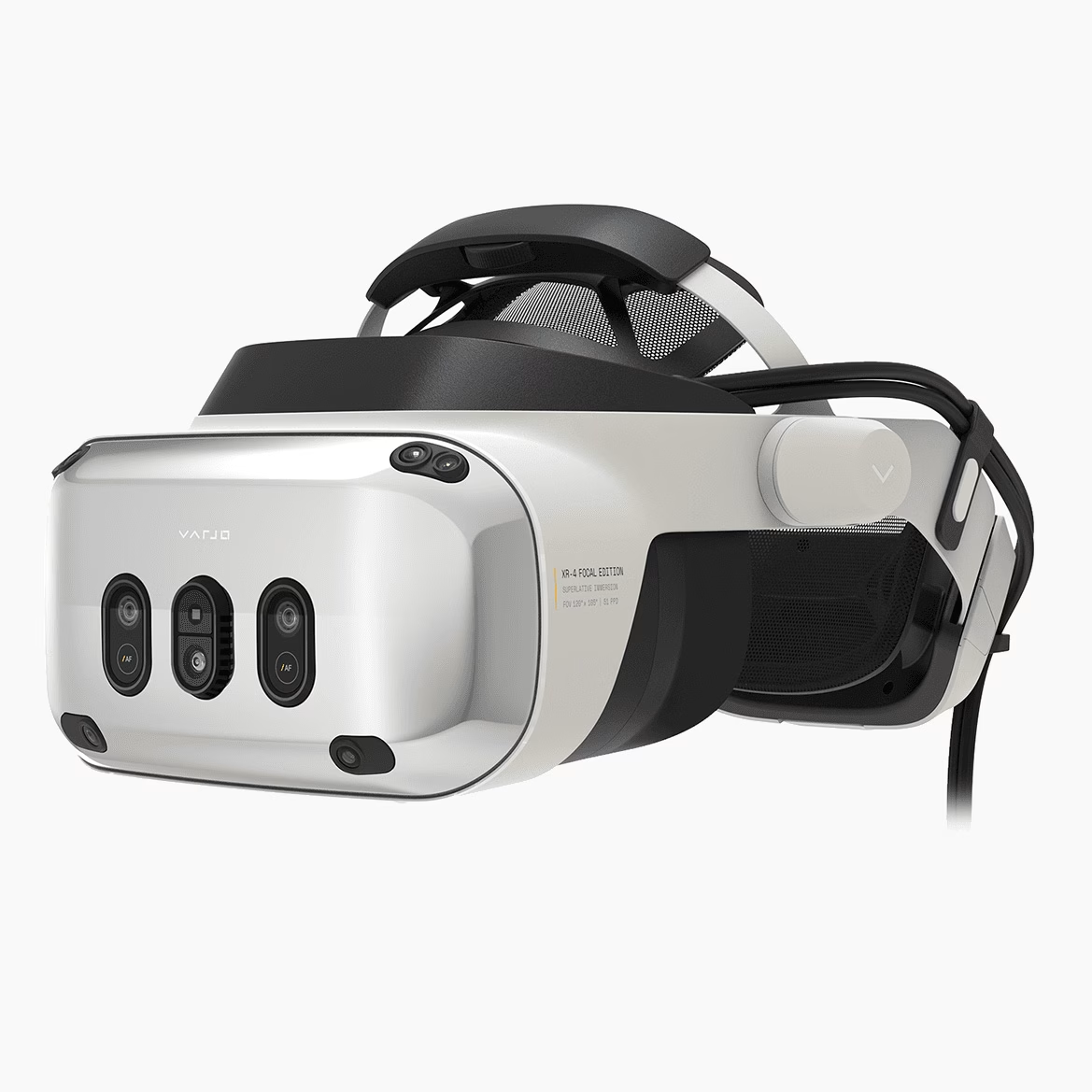
Varjo XR-4 Focal Edition
Varjo XR-4 Focal Edition: Enhanced Temporal Precision for Eye Movement Research
The XR-4 Focal Edition extends the XR-4 platform, introducing enhancements specifically for researchers who require fine-grained measurement of oculomotor behavior. The key differentiator is the 200 Hz eye tracking sampling rate, which enables accurate capture of short-duration fixations, saccades, microsaccades, and rapid shifts in attention.
This temporal resolution is particularly valuable in studies where eye movements constitute the primary dependent variable, such as those examining visual search, decision-making processes, reading behavior, or cognitive workload. The higher sampling frequency improves event detection reliability, reduces latency-related artifacts, and supports more nuanced temporal analysis.
The Focal Edition also includes improvements in spatial tracking and sensor fusion, supporting stable alignment of virtual content in space, especially critical in protocols involving depth transitions, locomotion, or manipulation of physical tools within MR environments.
However, the necessity of this enhanced precision should be evaluated relative to the study design. In research focused on more general gaze behavior (e.g., dwell time on AOIs or broader scan paths), the incremental benefits may not outweigh the increased hardware demands.
Best suited for:
- High-precision eye movement research
- Visual cognition and attention dynamics
- Saccadic behavior and fixation analysis
- Experimental protocols requiring high temporal resolution
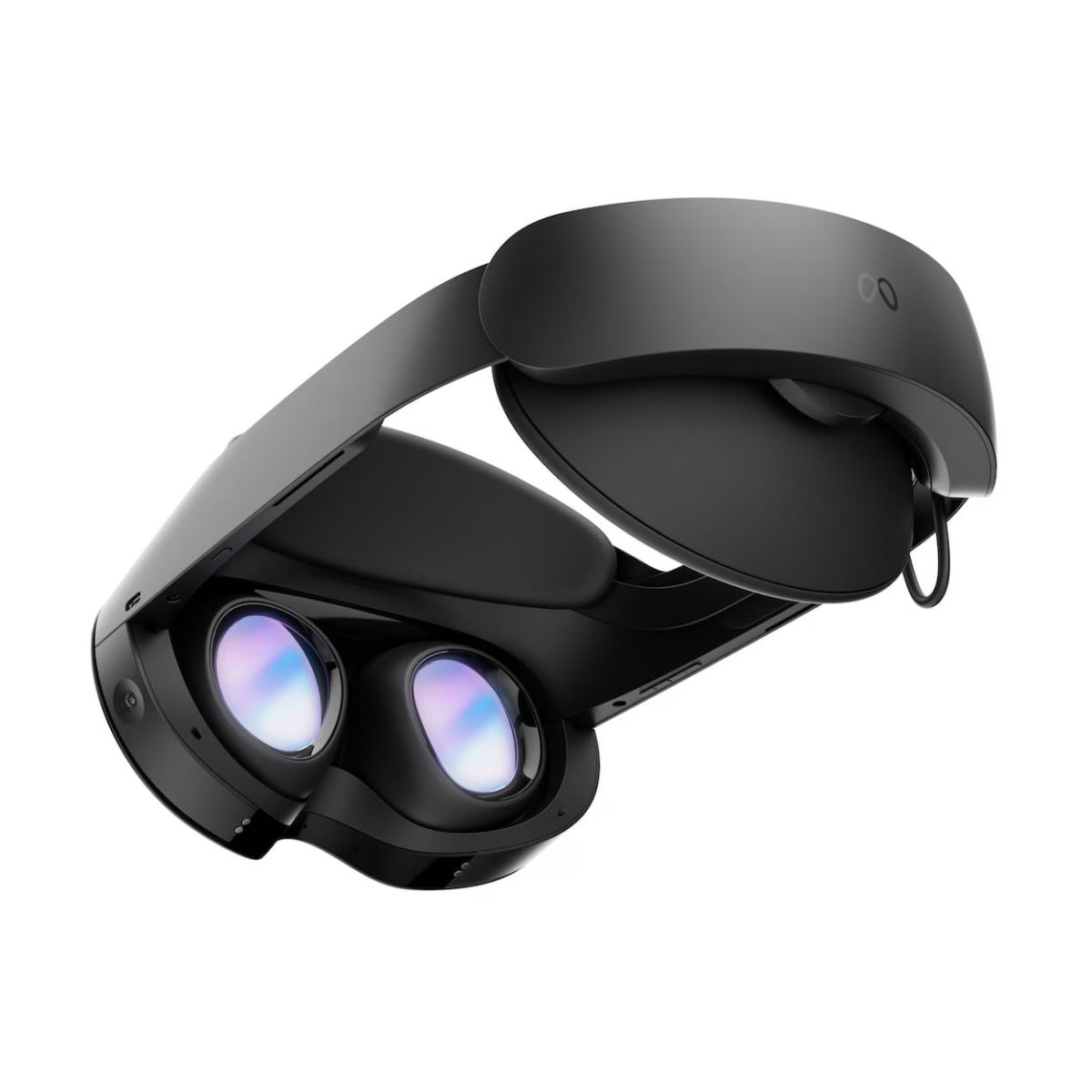
Meta Quest Pro
Meta Quest Pro: Operational Efficiency for Scalable Research
The Meta Quest Pro has been discontinued by Meta, but it is still possible to buy from some outlets that still have stock, or second-hand. Please note that the Meta Quest3 does not have eye tracking capabilities.
The Meta Quest Pro represents a practical solution for labs prioritizing accessibility, rapid deployment, and participant throughput. As a standalone, all-in-one system, it minimizes setup complexity and reduces infrastructure requirements, making it particularly suitable for large-scale behavioral studies, student-led research, or iterative UX evaluation.
While it does not match the XR-4 in terms of optical resolution or MR fidelity, the Quest Pro offers integrated eye tracking and supports synchronization with iMotions, enabling reliable multimodal data collection. This makes it viable not only for gaze-based experiments but also for combining eye tracking with physiological signals such as EEG, GSR, and EMG.
The system’s integration with Unity facilitates custom experimental development, and its ease of use supports high-volume data collection with reduced technical overhead. However, researchers requiring fine visual detail or precise spatial cues may find its limitations in optical clarity and passthrough fidelity restrictive.
Best suited for:
- Scalable behavioral and UX research
- Attention mapping and interface evaluation
- Training simulations and prototyping
- Studies emphasizing logistical efficiency
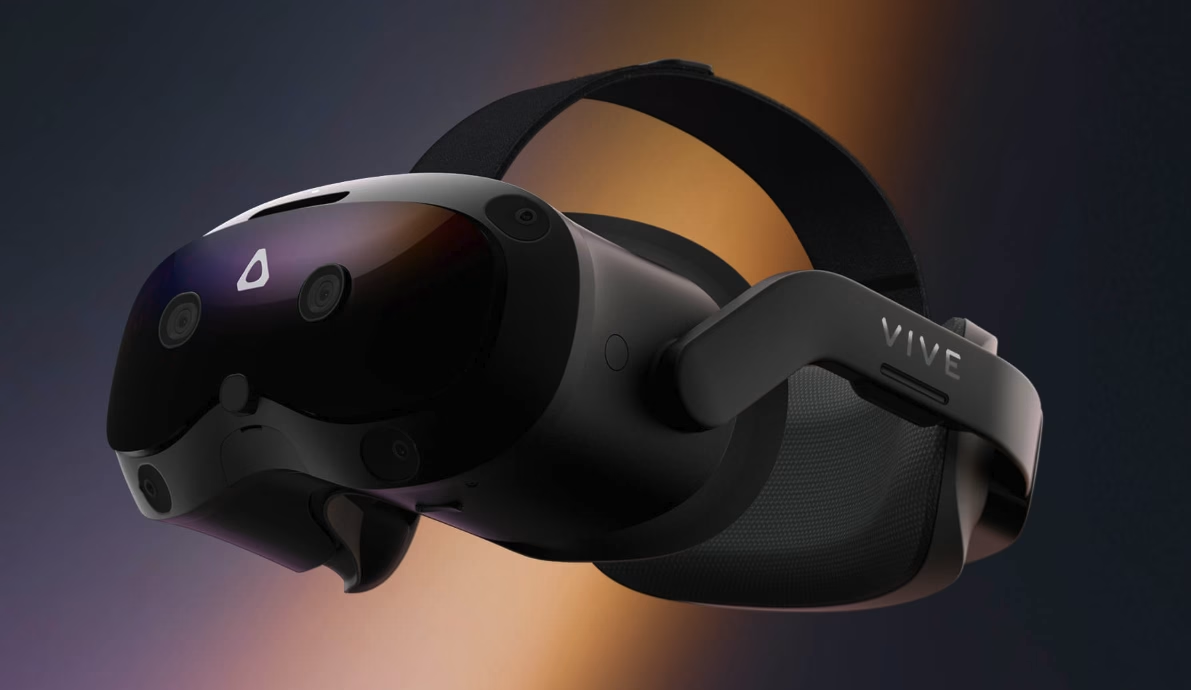
HTC Vive Focus Vision
HTC Vive Focus Vision: Standalone VR with Developer-Level Flexibility
The HTC Vive Focus Vision offers a middle ground between enterprise-grade standalone VR and the flexibility required for custom experimental design. Designed with OpenXR compatibility, it provides access to detailed eye tracking outputs—such as gaze vectors, fixation points, and pupil metrics—making it well-suited for researchers needing granular control over stimulus-response mapping.
As a standalone headset, it supports mobile and decentralized research setups, such as multi-room labs, longitudinal studies, or training simulations in field environments. Its synchronization with iMotions allows for integration with physiological sensors, supporting comprehensive data collection in multimodal research designs.
The trade-off lies in increased system complexity. Effective use requires diligent version control of firmware and runtimes, and achieving consistent calibration may necessitate carefully structured participant protocols.
Best suited for:
- Applied VR research in enterprise or field settings
- Training, procedural learning, and skill acquisition studies
- Custom protocol development via OpenXR
- Standalone operation in complex research environments
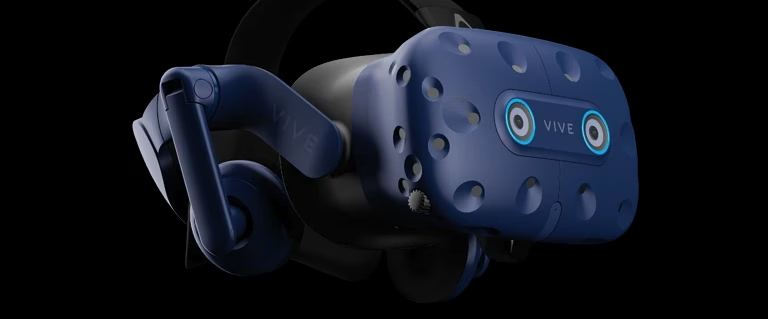
HTC Vive Pro Eye
HTC Vive Pro Eye: Established Platform for Controlled VR Experiments
The Vive Pro Eye has long served as a reliable workhorse for VR-based eye tracking research. As a PC-tethered system, it provides predictable latency, stable performance, and straightforward integration into controlled laboratory environments. Its wide adoption in the academic community has made it a foundational tool in attention mapping, gaze-based HCI, and visual behavior studies.
Supported directly by the iMotions VR Eye Tracking Module, the headset allows for robust synchronization with additional biometric sensors, ensuring high-quality data for both single- and multimodal experiments.
Although it has been officially discontinued, many labs continue to use the Vive Pro Eye effectively. Its primary limitations include optical fidelity, which is lower than newer systems, and limited forward compatibility with emerging VR standards.
Nevertheless, for labs prioritizing methodological consistency, or those with established PC-based research workflows, it remains a dependable and cost-effective option.
Best suited for:
- Foundational eye tracking experiments
- AOI-based gaze metrics in controlled settings
- Labs maintaining legacy infrastructure
- Research requiring stable, validated PC integration
Choosing the Right VR Headset for Research Objectives
Selecting the appropriate VR headset should be grounded in methodological considerations, not simply hardware specifications. The optimal choice depends on several interrelated factors:
- Research question and dependent measures: Are you measuring broad visual attention patterns or fine-grained oculomotor dynamics?
- Experimental context: Are you working in a tightly controlled lab, or do you require flexibility for mobile deployment?
- Technical infrastructure: Do you have the computing resources and personnel to support high-end systems?
For studies requiring visual realism, ecological validity, and precise temporal data, headsets like the Varjo XR-4 and XR-4 Focal Edition provide the highest data fidelity. For researchers prioritizing scalability, deployment speed, or working with limited technical support, the Meta Quest Pro and Vive Focus Vision offer compelling operational advantages.
Conclusion
The integration of eye tracking with VR has transitioned from experimental to essential in many domains of human behavior research. The five VR systems discussed here each represent different trade-offs between fidelity, precision, usability, and operational constraints, and all support iMotions integration, ensuring synchronized data collection across modalities.
Choosing the right headset is not simply a hardware decision; it is a methodological commitment that should align with your experimental goals, participant characteristics, and research infrastructure. As eye-tracked VR becomes increasingly central to studies in neuroscience, psychology, UX, and human-machine interaction, selecting the appropriate tool is critical for generating reliable, publishable, and impactful results.
Frequently Asked Questions
1. Are these VR headsets suitable for peer-reviewed research?
Yes. All five systems are currently in use within academic and applied research environments. Successful publication depends on alignment between study objectives and hardware capabilities, as well as transparent reporting of limitations.
2. Is a higher eye tracking sampling rate always better?
Not in every case. While higher sampling rates (e.g., 200 Hz) improve the detection of short fixations and saccades, lower rates may be sufficient for studies focused on aggregate gaze metrics or broad attention mapping.
3. Can these headsets be used with other biosensors in iMotions?
Yes. Integration ensures that eye tracking data is temporally aligned with other physiological signals such as EEG, EDA, ECG, and facial expression metrics, enabling multimodal analysis.
4. Are standalone headsets appropriate for controlled experimental research?
They can be, provided the timing, calibration, and software environments are rigorously managed. Standalone systems offer ease of use but may introduce additional variance compared to tethered setups.
5. Should a research lab consider investing in more than one headset?
Often, yes. Different experimental designs benefit from different hardware configurations. Many institutions use a tiered approach, combining a high-fidelity system for precision tasks with a more accessible standalone unit for scalability.
Download iMotions VR Eye Tracking Brochure
iMotions is the world’s leading biosensor platform.
Learn more about how the VR Eye Tracking Module can help you with your human behavior research