

Abstract: It remains uncertain regarding the safety of driving in autonomous vehicles that, after a long, passive control and inattention to the driving situation, how the drivers will be effectively informed to take-over the control in emergency. In particular, the active role of vehicle force feedback on the driver’s risk perception on curves has not been fully explored. To investigate it, the current paper examined the driver’s cognitive and visual responses to the whole-body haptic feedback during curve negotiations. The effects of force feedback on drivers’ responses on curves were investigated in a high-fidelity driving simulator while measuring EEG and visual gaze over ten participants. The preliminary analyses of the first two participants revealed that pupil diameter and fixation time on the curves were significantly longer when the driver received whole-body feedback, compared to none. The findings suggest that whole-body feedback can be used as an effective “advance notification” of hazards.

Related Posts
-

The Brain’s Buy Button Is a Myth
-

How to Study Indoor Wayfinding: What People Notice, Where They Struggle, and What to Measure
-

Combatting Fraud in Online Surveys: What To Do When Your Respondents Aren’t Real
-
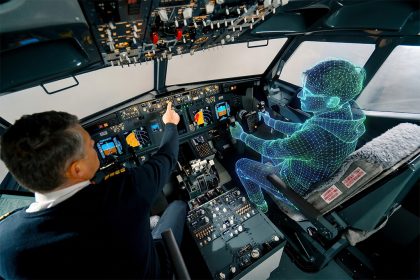
Human-in-the-Loop Digital Twins: How Real-Time Biosensor Data Is Transforming Simulator Research