


Discover the top 10 biosensor studies that enhance consumer and retail insights research. This comprehensive overview highlights innovative methodologies and key findings, providing valuable information for businesses seeking to understand consumer behavior and improve retail strategies effectively. Stay ahead in the competitive market with these insights.
Table of Contents
From advertising effectiveness to shelf behavior and real-world decision-making – and everything in between.
In consumer and retail research, simply asking better questions isn’t enough anymore. Surveys, interviews, and focus groups still play a valuable role, but they mostly capture what people are able or willing to articulate.
The reality is, many of the drivers behind actual purchase behavior operate below the surface, beyond conscious awareness. Most of us can’t easily explain where our attention goes, how something makes us feel in the moment, or the subtle ways we react to stress, effort, or comfort. These instinctive, split-second responses are often difficult to describe, let alone quantify, which means traditional research methods frequently miss a significant layer of insight.
That’s where biosensor-based research steps in. By measuring non-verbal responses, such as emotional reactions, attention, and physical engagement, biosensors provide a continuous, objective view of how consumers experience a brand, product, or environment. When applied thoughtfully, these tools integrate seamlessly into the research process, offering rich behavioral insights without interrupting the experience.
Importantly, biosensor data doesn’t replace traditional methods, it enhances them. By complementing what people say with how they truly respond, we shift from surface-level description to deeper explanation and understanding.
In this article, we’ll explore 10 types of biosensor studies that are delivering meaningful results across advertising, retail environments, packaging, and product experiences, helping brands uncover what really drives consumer behavior.
1. Emotional Advertising Effectiveness
One of the most well-established and impactful uses of biosensors in consumer research is measuring advertising effectiveness. But the real value of these studies isn’t just in labeling an ad as “emotional” or not, it’s in uncovering how emotional responses unfold over time, and how they interplay with attention and memory.
By combining facial expression analysis with physiological metrics like galvanic skin response (GSR) and heart rate variability, researchers can track subtle emotional shifts moment by moment throughout an ad. This allows teams to pinpoint exactly where emotional engagement builds, where it dips, and whether repeated viewings create emotional fatigue, often long before traditional survey responses start to show any change.

For seasoned insights teams, this opens the door to a more dynamic approach, moving beyond static, post-exposure feedback to real-time emotional diagnostics. These deeper insights inform smarter decisions around creative sequencing, editing strategies, and media placement, helping ensure that campaigns don’t just make an impression, but make the right one.
Emotional Ad Effectiveness & Wear-In / Wear-Out Analysis
Key question: Does the ad emotionally land, and does it continue to do so with repeated exposure?
By combining facial expression analysis, GSR, and heart-rate measures, researchers can track emotional engagement and arousal across multiple ad exposures. This enables detection of:
- Early emotional responses associated with memorability
- Emotional fatigue across campaign frequency
- Moments that trigger disengagement or confusion
Why it matters: Emotional decay often precedes drops in media effectiveness—well before survey metrics move.
2. Visual Attention and Message Hierarchy in Advertising
Not all attention is created equal. If a brand element appears too late or is missed entirely, it cannot fulfill its purpose, no matter how strong the creative execution may be. Eye tracking provides a way to move beyond assumptions about visual prominence and instead quantify exactly what viewers are seeing, when they see it, and how long their attention stays focused.
More advanced advertising studies take this further by analyzing the sequence in which visual elements are noticed. This helps determine whether brand cues are seen before or after emotional peaks, and whether calls to action are actually processed or simply present on screen without impact. These distinctions are critical. Attention alone does not drive results unless it is paired with emotional engagement and meaningful interpretation.
For experienced insights teams, eye tracking becomes more than just heatmaps and highlight reels. It turns into a strategic tool for understanding visual flow and optimizing the viewer journey through deliberate attention sequencing and thoughtful design choices.
Studying Visual Attention & Message Hierarchy in Advertising
Key question: What is actually seen—and what is ignored?
Eye tracking reveals the true visual hierarchy of ads across formats such as video, digital, print, and out-of-home. Advanced studies examine:
- Time to first fixation on brand cues
- Attention competition between brand, product, and call to action
- Gaze paths associated with message comprehension
Advanced insight: High attention alone does not equal persuasion; attention must align with the right elements at the right time.
3. Shopper Shelf Behavior and Visual Search Strategies
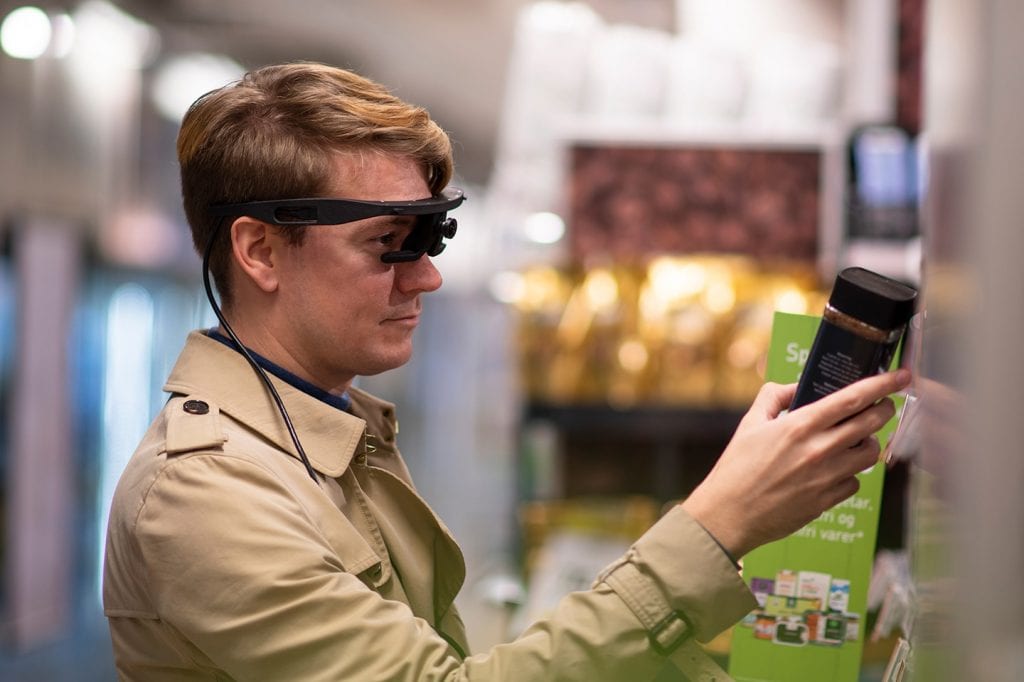
In retail environments, consumers rarely shop in a calm, leisurely way. Instead, they scan quickly, filter options rapidly, and make decisions under time pressure and cognitive load. Mobile eye tracking allows researchers to capture how shoppers actually move through the aisle, offering insights that traditional sales data cannot reveal.
These studies uncover whether shoppers are guided by brand blocks, color cues, pricing signals, or established search habits. They also highlight how increasing shelf complexity can create visual noise, making it harder for new or less familiar products to stand out. In many cases, shoppers revert to default choices simply because it is easier than processing the cluttered visual landscape.

For retail teams, one of the most important takeaways is that discoverability often matters more than preference stated in a survey. Products that align with natural search patterns and visual behavior are more likely to be purchased, even if shoppers claim to prefer something else when asked directly.
Studying Shopper Shelf Navigation & Visual Search Strategy
Key question: How do shoppers visually explore complex shelves under time pressure?
Using mobile eye tracking in real or simulated retail environments, researchers can model:
- Bottom-up versus top-down search strategies
- Shelf zones of visual dominance
- Brand blocking versus SKU-level competition
Why it matters: Shelf performance is often driven by discoverability rather than preference alone.
4. Packaging Design and the First Moment of Truth
Packaging decisions often involve long discussions and detailed analysis, yet consumers typically form their impressions in just a few seconds. Biosensor-based research focuses on that critical first moment of exposure, where much of the decision-making actually begins.
Eye tracking helps determine whether essential information on the packaging is immediately visible or hidden from view. At the same time, facial expression analysis and physiological measures capture fast, instinctive reactions like curiosity, hesitation, or discomfort. These early responses occur before conscious thought and often serve as stronger predictors of behavior than verbal feedback or stated preferences.
More sophisticated studies take it a step further by comparing how packaging performs on its own versus in a competitive shelf environment. This often reveals a gap between how well a design does in a controlled test and how it competes in a crowded retail setting. In many cases, packaging that scores well in isolation struggles to attract attention or generate interest when surrounded by alternatives.
Studying Packaging Design & First-Moment Evaluation
Key question: Does the package communicate value instantly?
Biosensor-driven packaging tests focus on the first few seconds of exposure:
- Eye tracking → visual clarity and findability
- Facial expressions → emotional valence
- GSR → arousal and novelty-related responses
Advanced use: Comparing isolated and competitive shelf contexts to detect real-world performance gaps.
5. Price Perception, Friction, and Cognitive Load
Price is rarely evaluated through logic alone. Consumers respond to pricing with a mix of emotional reactions and cognitive effort, even if they believe they are making purely rational decisions. Biosensors provide a way to surface these less visible aspects of the pricing experience.
Tools like EEG, pupil dilation (when lighting and tracking conditions are suitable), and galvanic skin response can reveal indicators of mental effort during tasks such as comparing prices, evaluating product bundles, or interpreting promotional messages. When cognitive load is high, it often points to confusion, hesitation, or a lack of trust—even if consumers claim the price seems reasonable.
For experienced insights teams, this perspective shifts the understanding of price sensitivity. It is not just about what consumers say they are willing to pay, but about how much effort and emotional strain the pricing creates during the decision process. Recognizing this helps organizations design pricing strategies that feel intuitive and trustworthy, rather than overwhelming or unclear.
Studying Price Perception & Cognitive Load
Key question: Is pricing creating friction, even if consumers do not explicitly report it?
By combining EEG (in controlled settings), GSR, and eye-tracking-derived measures, researchers can assess:
- Mental effort during price comparison
- Stress responses to discounts versus surcharges
- Cognitive overload caused by complex offers
Why it matters: Price-related friction often appears as cognitive strain before explicit rejection.
6. In-Store Experience and Environmental Design
Retail environments begin influencing shopper behavior well before anyone reaches the shelf. Elements like lighting, sound, layout, scent, and spatial density all play a role in shaping emotional state and mental focus during the shopping experience.
With biosensors, researchers can evaluate these environmental factors in a structured way. By measuring responses such as emotional arousal and cognitive load, it’s possible to assess whether a store layout encourages relaxed exploration, increases stimulation, or causes mental fatigue. Findings often reveal that the most effective environments create a balance, where emotional engagement is moderate and cognitive strain remains low. This combination tends to increase dwell time and promote more positive shopper interaction.
This kind of insight allows store design conversations to go beyond surface-level aesthetics. Instead of guessing what might look appealing, teams can ground decisions in real, measurable human responses, creating spaces that not only look good but genuinely support better shopping experiences.
Studying In-Store Experience & Environmental Design
Key question: How does the retail environment influence emotional state and dwell time?
Biosensor studies can evaluate:
- Lighting, color temperature, and spatial layout
- Soundscapes and scent diffusion
- Emotional comfort versus overstimulation
Advanced insight: Effective environments balance moderate arousal with low cognitive load, rather than maximizing stimulation.
7. Claim Processing and Cognitive Engagement
Not all messages are processed equally. Simply seeing a claim does not guarantee that it has been understood. This is where tools like eye tracking and EEG become especially valuable. They help determine whether a message is truly being cognitively processed or just skimmed over without meaningful engagement.
These studies often highlight moments where consumers lose focus, whether due to industry jargon, overly dense content, or mixed messaging that creates confusion. They also help distinguish between basic visual recognition, such as noticing a headline, and actual comprehension, where the message is clearly understood and retained.
For brands in regulated industries or those that rely heavily on trust and transparency, this difference is critical. Clarity and comprehension are not optional, they are central to effective communication. Understanding how real people engage with messaging allows teams to craft content that informs, reassures, and resonates.
Studying Claim & Benefit Comprehension
Key question: Are consumers cognitively processing the message, or simply scanning it?
Eye tracking and EEG (in controlled contexts) can reveal:
- Indicators of cognitive engagement during claim exposure
- Processing breakdowns caused by clutter or jargon
- Differences between recognition and comprehension
Why it matters: Claims can be seen and read without being meaningfully processed.
8. Brand Trust and Authenticity at the Emotional Level
Trust is not something that forms instantly. It builds gradually through consistent emotional experiences across time and touchpoints. When designed with this in mind, longitudinal biometric studies can help track how a brand makes people feel over multiple exposures, whether it consistently promotes calm engagement, triggers emotional volatility, or subtly increases stress.
By analyzing facial expressions and patterns of physiological response, researchers can detect signs of unease or hesitation before consumers are even able to put their doubts into words. This becomes especially valuable when evaluating messaging related to sustainability, corporate responsibility, or brand purpose, areas where trust plays a central role in decision-making.
From a biosensor standpoint, trust is rarely about dramatic emotional highs. Instead, it often shows up in the form of emotional coherence. When a brand consistently evokes a steady, positive emotional state across different moments, it lays a stronger foundation for trust than one that produces occasional peaks surrounded by uncertainty.
Studying Brand Trust & Authenticity
Key question: Does the brand feel credible at an emotional level?
Longitudinal biometric study designs can track:
- Emotional consistency across touchpoints
- Stress responses to sustainability or CSR messaging
- Facial expression patterns associated with skepticism or reassurance
Advanced insight: Trust-related signals often emerge through emotional stability rather than intensity.
9. Product Experience and Sensory Interaction
When consumers physically interact with a product, whether tasting, touching, trying it on, or unboxing, it creates a rich experience that verbal feedback alone often fails to fully capture. Biosensors provide an additional layer of insight by measuring physiological responses that participants may not be able to express clearly or consciously.
These signals can reflect a wide range of emotions, such as pleasure, surprise, disappointment, or discomfort, all in real time. In sensory research, this becomes especially useful for distinguishing between polite or socially expected approval and a truly positive, authentic reaction to the product.

These kinds of insights are particularly valuable during the early stages of product development. Small sensory adjustments, such as texture, scent, or packaging feel, can have a much larger impact than expected. Understanding these subtle but meaningful reactions helps teams fine-tune products in ways that are more likely to resonate with consumers on an instinctive level.
Studying Product Experience & Sensory Response
Key question: How does the product feel—beyond stated liking?
Multimodal biosensor setups are commonly used during:
- Taste tests and sensory panels
- Haptic interaction with packaging or devices
- Unboxing and first-use experiences
Measures such as GSR, heart rate, and facial expressions provide insight into affective responses during interaction.
10. Mapping the Full Path to Purchase
One of the most valuable ways to use biosensors is by applying them across multiple stages of the consumer journey. When data from ad exposure, in-store behavior, and hands-on product interaction are aligned, researchers gain a more complete picture of how people respond at each touchpoint. This helps reveal where emotional or cognitive friction may start to build.
These studies often uncover that conversion issues are not the result of one obvious weak point. Instead, they tend to emerge from the accumulation of smaller challenges, moments of hesitation, confusion, or disengagement that add up over time. A consumer might start out interested but gradually lose momentum without a clear reason that a survey or focus group could easily uncover.
Addressing even a single point of friction can have a noticeable effect on the overall experience. By reducing mental strain and improving emotional flow along the journey, brands can make each step feel smoother and more intuitive, ultimately increasing the likelihood of conversion and long-term loyalty.
Studying Path-to-Purchase Journey Mapping
Key question: Where does friction accumulate across the full journey?
By synchronizing biosensor data across stages (ad → shelf → product), researchers can identify:
- Emotional drop-off points
- Moments of cognitive overload
- Touchpoints with disproportionate influence on conversion
Why it matters: Conversion failure is often cumulative rather than driven by a single breakdown.
From Measurement to Meaning
For advanced consumer and retail insights teams, biosensors are no longer experimental tools. They are increasingly essential instruments for understanding how decisions actually unfold.
Platforms such as iMotions support this work by synchronizing eye tracking, facial expression analysis, EEG, GSR, heart rate, and contextual data within a unified analytical environment, making it possible to connect attention, emotion, and cognition within a single interpretive framework
Frequently Asked Questions (FAQs)
1. What is biosensor consumer research?
Biosensor consumer research uses physiological and behavioral measurements, such as eye tracking, facial expression analysis, galvanic skin response (GSR), heart rate, and EEG, to observe how consumers respond in real time. Unlike surveys or interviews, these methods capture attention, emotion, cognitive effort, and stress as they occur, including responses consumers may not consciously recognize or be able to articulate.
2. How does biosensor research complement traditional consumer research methods?
Biosensor research does not replace surveys, interviews, or focus groups. Instead, it adds an objective layer that explains why certain behaviors or opinions occur. Traditional methods describe attitudes and intentions, while biosensors reveal moment-by-moment emotional and cognitive dynamics that often precede or contradict self-reported feedback.
3. Are biosensor-based studies reliable and scientifically valid?
When designed and interpreted correctly, biosensor studies are grounded in well-established principles from neuroscience and psychophysiology. Their reliability depends on proper calibration, controlled study design, appropriate sample sizes, and expert analysis. Used responsibly, biosensors provide robust directional insights rather than absolute truths, making them especially valuable for comparative and diagnostic research.
4. What types of business questions are best suited for biosensor consumer research?
Biosensor methods are particularly effective for questions involving:
- Emotional engagement with advertising and branding
- Visual attention and message hierarchy
- Shopper navigation and shelf discoverability
- Packaging clarity and first-impression impact
- Cognitive load in pricing and promotional decisions
- Sensory product experiences and unboxing moments
These questions often involve subconscious processes that traditional research cannot fully capture.
5. Can biosensor research be conducted in real-world retail environments?
Yes. Advances in mobile eye tracking and wearable sensors make it possible to collect data in real or highly realistic retail settings. While laboratory studies offer greater experimental control, in-store research provides valuable ecological validity by capturing behavior under real-world conditions such as time pressure, noise, and visual clutter.
6. How should insights teams interpret biosensor data responsibly?
Biosensor outputs should always be interpreted within context and alongside other data sources. Signals such as arousal or cognitive load are not inherently positive or negative; their meaning depends on timing, intensity, and alignment with the research objective. The most effective studies integrate biosensor data with qualitative feedback, behavioral metrics, and business KPIs.
7. Is biosensor research suitable for all brands and categories?
Not every research question requires biosensors. These methods are most valuable when emotional, attentional, or cognitive mechanisms are central to decision-making, such as in competitive categories, high-involvement purchases, or complex retail environments. For simple or purely factual questions, traditional research methods may be sufficient.
8. What is the biggest misconception about biosensor consumer and retail research?
A common misconception is that biosensors “read minds” or deliver definitive answers on their own. In reality, they provide signals, not conclusions. Their power lies in revealing patterns and friction points that guide interpretation, hypothesis testing, and better decision-making when combined with human insight and domain expertise.