Discover how Affectiva’s emotion analytics uncovered surprising viewer reactions to Jaguar’s Type 00 concept car ad. Learn how emotional data, confusion spikes, and repeated exposure shaped our analysis of this campaign.
Table of Contents
In our last case study blog, we talked about how the Jaguar Copy Nothing advert had generated some negative responses amongst viewers with its edgy approach. When the Type 00 concept car advert was released, we decided to test this among our colleagues to see what their thoughts were, especially for those who had previously seen the Copy Nothing ad beforehand.
The concept video, titled An Original Work of Art, highlighted Jaguar’s new branding and design. The visuals within the video are striking – it continues the Copy Nothing narrative of an otherworldly atmosphere, showcasing the various features of Type 00 car and its new colors of London Blue and Miami Pink.
While the Type 00 car was not intended for production, the goal of the concept car was to show what consumers are to expect of Jaguar’s new electric vehicles slated for release in 2026.
We tested this ad with our colleagues to evaluate their emotional and attitudinal responses and visual attention using Affectiva’s facial expression analysis and calibration-free eye tracking technologies to see how this concept video can drive emotional reactions.
For those who opted to participate and have their face videos recorded for research purposes, respondents watched the video twice and then completed a brief survey.
Do the Jaguar Type 00 selling points work? Understanding the benefits of multiple exposures
In many cases, research projects in our system implement a monadic study design where the respondent views the ad once before proceeding to the next stage of the study. However, for some studies, having a repeated exposure can help to further understanding of whether the video content is engaging after a repeated view.
For example – if there’s a joke or some kind of punchline, does it stick with the audience in the second viewing? Likewise, if there are confusing elements in the content, does watching the content for a second time help to remedy uncertainty?
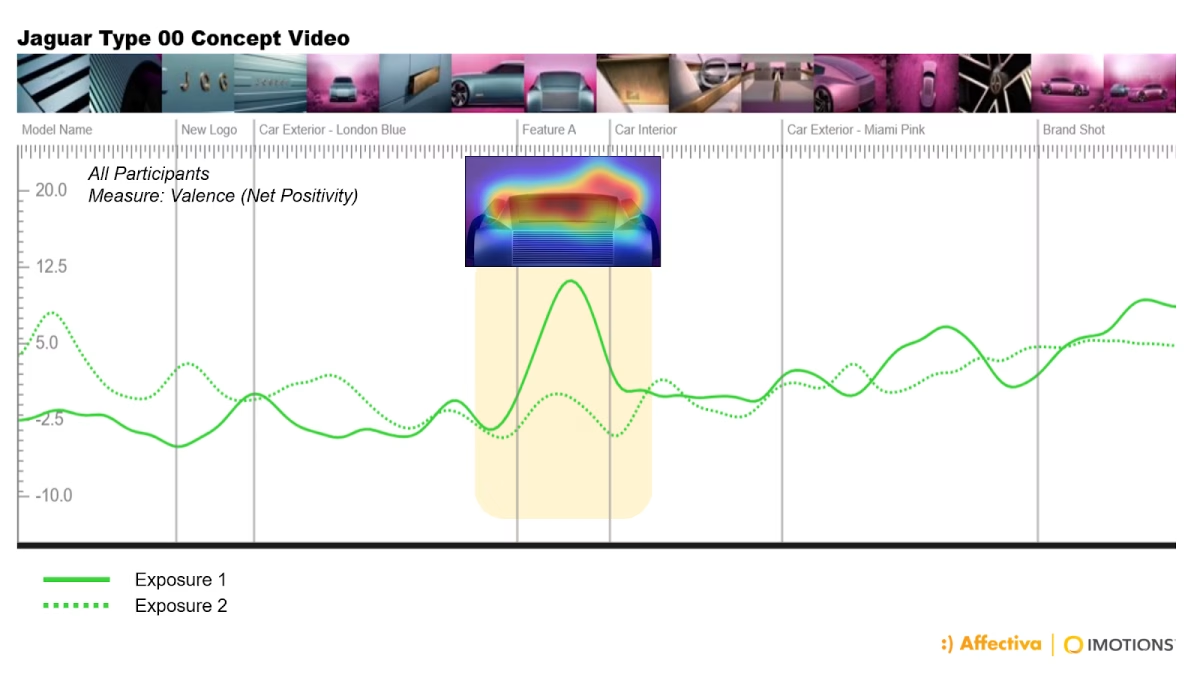
With a concept video like this, we wanted to use two exposures to see if there were any changes to viewers’ emotional journey whilst watching the video twice. While overall valence was on par with both viewings (green, below), we can see the first exposure (solid line) had a large peak in emotional positivity occurring when the Jaguar Type 00 car had its doors opening upwards which gave the Type 00 a modern hi-tech edge. Of all the interior and exterior features presented, the doors (Feature A) had the highest emotional positivity, most likely attributed to the novelty of the doors opening in a unique and futuristic way. This emotional positivity did fade in the second exposure (dotted line), indicating that the novelty waned over time.
Using Affectiva’s video testing dashboard, we can utilize the Scene Definition tool to build out moments of interest (e.g., punchline, branding moment, etc.) to provide a breakout of summary metrics by scene. This allows researchers to be able to better understand what scenes may be more emotionally powerful, areas that can be optimized, or identify moments of interest, for example.
For this analysis, we differentiated different scenes by which part of the car, logo or branding that was being shown (table below).

We can see that the scenes that had the highest facial expressiveness and emotional positivity came through during the doors being shown and during the ending brand shot with the two concept cars.
How emotions can add insights to concept evaluation
For concept videos that take viewers through various features in a short amount of time, we wanted to also see if there were any confusing elements of the video as viewers look at the Type 00 car. By pulling up the Confusion metric (below, green), researchers can use this measure to see if there were any scenes within the content that may have been perplexing for viewers.
Of note, in the first exposure, we noticed a couple of areas that left respondents confused: one was the first view of the Type 00 car from the front, and the second being the internal shots of the car leading the viewer’s attention back to the exterior.
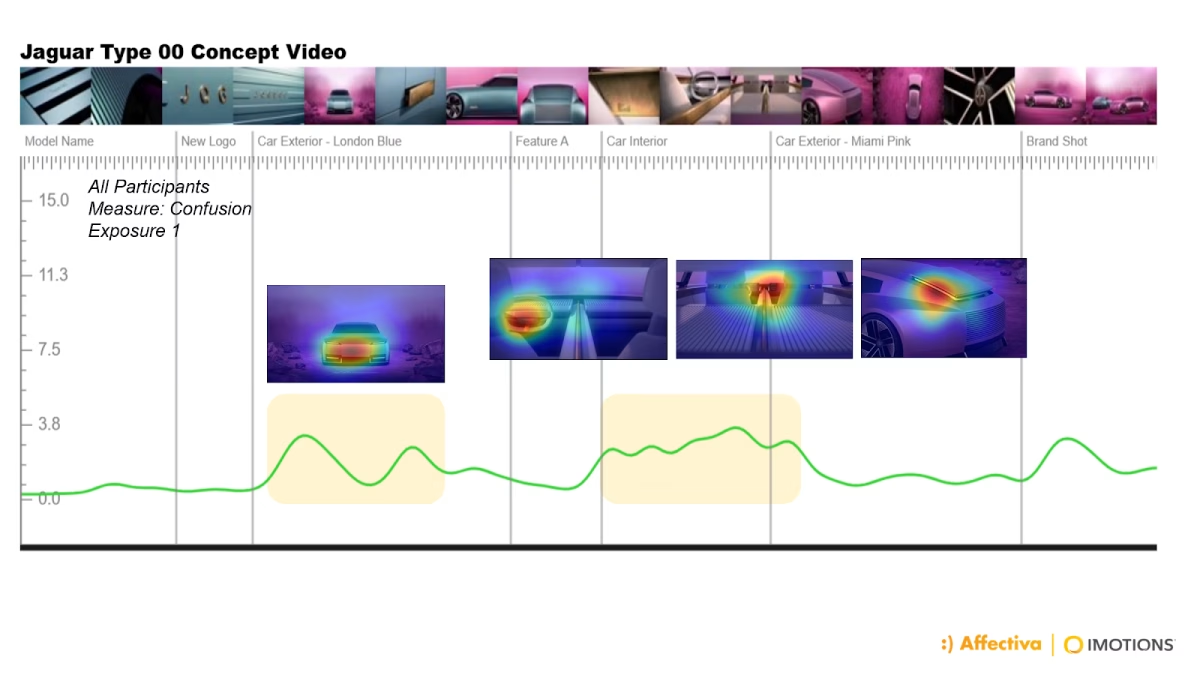
The initial view of the car may have been confusing as the previous shots before the exterior was focused on the Type 00 model name and new Jaguar logo leading into a quick cut of the car. Confusion continued to spike and be sustained when the interior of the car was featured, the only focal point was the steering wheel leading to the back of the car with the rear window being covered.
While perhaps the intent was to portray the Type 00 as a sleek and futuristic car, it may have instead led people to question the nature of the vehicle and its practicality despite the fact that the model itself is a non-production vehicle.
Does positive valence always equal liking? (Answer: it depends on the context!)
Looking at the different scenes, we identified two areas of higher emotional positivity: the first when the doors open and move above the car, and the second when towards the final branding moment.
Interestingly, when we segmented the data by survey breaks (graph below), we noticed that those who claimed that they disliked the concept car had higher positive valence towards the end of the video. In comparison, those who claimed that they liked the ad had lower positive valence.
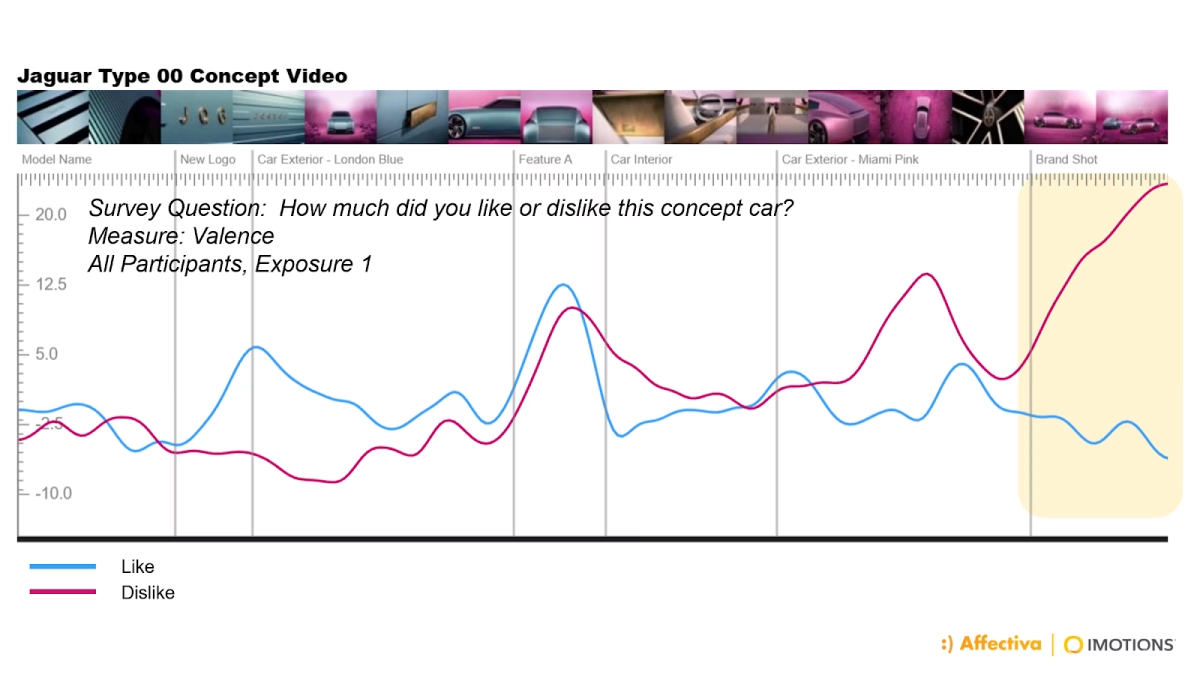
There was an even 50-50 split between those who answered on the survey that they either liked or disliked the concept car. When we investigated the open-ended survey responses, we found similar themes from those who claimed they disliked the Type 00 concept car. Respondents who stated they disliked the video were more critical about the creative approach to the concept, the new Jaguar branding and the lack of practicality that came with the Type 00 vehicle.
So, while higher positive valence may be characteristically a sign of emotional positivity through smiles and laughs, in this circumstance it can be interpreted differently. Those who disliked the ad and perceived An Original Work of Art to be very poor for an automotive concept video were smiling or laughing at the video creative in a negative way, most noticeably towards the end and the final branding moment when both car models are shown on screen.
Our thoughts on concept testing
Facial expression analysis does not just have to be for advertising and entertainment content – Affectiva’s facial coding AI has been deployed in a variety of use cases, including concept testing.
Using facial coding, emotional insights can be used to help evaluate concept videos at various stages of the creative development process to help teams put out a finished piece of content that tells consumers a full story about the product, how it works, and why it’s worth investing in.
While Jaguar’s A Work of Art is certainly quite different, the brand joins the myriads of other luxury designer brands that have gone through rebranding. With this, there may be some wiggle room for Jaguar to prove itself when it releases its line of EVs and continues painting itself as an innovative brand in the automotive world in 2026 onwards.
If interested in learning more about Affectiva Media Analytics’ technology and capabilities, reach out to the iMotions team today!