

iMotions Education engages young students
From theory to application in Niels Brock’s Neuromarketing Masterclass
iMotions Education has been used by thousands of university students. In this Case Story, we tested out iMotions Education with high school/gymnasiet students.
University Lecturers appreciate:
- Simplicity. We consistently get feedback that university lecturers onboard students within a single class period. After this, students can use this edtech tool independently. In this case study, high school students were also onboarded in a single class period.
- Scalability. iMotions Education is browser-based, so students can use it on their own laptops with no downloads or additional hardware. This means each student can use the tool inside the classroom or at home for remote learning. Each student can have their own access.
- Flexibility. iMotions Education can be used to teach many different subjects at different levels. Universities are using it in bachelor-level courses and MBA programs. It is used to teach a variety of subjects, often in business schools, giving students hands-on research experience and the freedom to pursue their own interests.
Recently, iMotions had the opportunity to introduce iMotions Education to students at Niels Brock in Copenhagen as part of their Neuromarketing Masterclass.
Table of Contents
Niels Brock’s Neuromarketing Masterclass
Niels Brock is a Danish gymnasium, which is similar to late high school or sixth form in US/UK system. Masterclasses at Niels Brock are extracurricular course offerings. This masterclass was offered to multiple education lines: the UX line, Future Business Line, and Creative Marketing Line.
The foundation of this Neuromarketing Masterclass is psychology and marketing. This masterclass was taught by Sabine and Christina. Sabine Kerff Michelsen has been a teacher at Niels Brock for 6 years and has a background in Psychology. Christina Szankowski-Slidsborg teaches Marketing and has been at Niels Brock for 16 years. Their aim was to add a new layer to students’ previous theoretical knowledge in psychology and marketing, using biometrics.
We have experienced a lot of interest in neuromarketing. We wanted to brighten that field for them. That’s basically what we have tried this year to introduce them to some of the psychology they know, some of the marketing they know, and then build the biometric knowledge upon that.
-Sabine Kerff Michelsen, Lektor Niels Brock
Yeah, it’s a combination between psychology and marketing. It’s like a fusion between the two. From our textbook, it will take neuromarketing and go much deeper into it. That’s why it’s a really nice combination of the two courses.
-Christina Szankowski-Slidsborg, Lektor Niels Brock
Demo
On the first day, iMotions gave a lecture at Niels Brock. This included a lecture and a demo of iMotions Lab, which is more advanced than the iMotions Education tool, but helped students see what is possible with biometrics.
I was quite nervous at the beginning, but the students seemed to respond very well to Danni’s lecture and really just listen and be really interested in the stuff he was presenting. As the minutes went along, I think the feeling was very good. I could definitely see the students working with iMotion’s technology and software.
-Sabine Kerff Michelsen
After this demo, the students were given a business case and access to iMotions Education, a browser-based biometric education tool, on their own laptops.
Business Case for Business Students
For the business case, students formed groups and imagined they were an agency hired to find a creative team for their client’s new video advertisement. These “agencies” came up with a name and logo and then chose which industry their client was in.
Students selected two video advertisements from that industry and uploaded them into iMotions Education. They built an online research study that would include eye tracking data and facial expression analysis, as well as surveys.
Then, they sent a URL with their study to their classmates, who would act as study participants and watch the commercials. With their classmates’ consent, the “agencies” collected eye-tracking and facial expression data from the participants’ laptop web cameras as well as responses to the survey questions.
From this data, the “agencies” evaluated the performance of each ad and recommended a creative team to their “client” based on the eye tracking and facial expression analysis data.
To get started, representatives from iMotions gave the students a live demo of iMotions Education, collecting data and performing analysis. Once students received the business case and got started with iMotions Education on their own computers, they were on their own to try to complete the business case in a few days.
“When you left, they continued the work. They were so deep into what they were working on that they didn’t… Maybe they didn’t really notice you left, but you did. I think that was a good sign because they were so into what they were doing. But then they continued working and it just kept going until almost five o’clock that afternoon.
-Christina Szankowski-Slidsborg
Actually, we experienced that they often help each other. The ones who got it under control could help the others who were still struggling a little bit. So not as much chaos as I expected when you guys left.
-Sabine Kerff Michelsen
Students in the Spotlight
A few days later, the Niels Brock Neuromarketing Masterclass students came to the iMotions office. Peter Hartzbech, the founder and CEO of iMotions, gave a presentation about forming the company and how the technology has been used in industries outside of marketing.
Then, the students presented their business cases. Students chose to compare fast food chains, beers, and beauty brands. They talked about engagement from the facial expression analysis and brand cut-through with heatmaps of eye-tracking data. During their five-minute power-pitches, they took us through the brands and ads they were comparing, their data, their results, and their insightful recommendations.
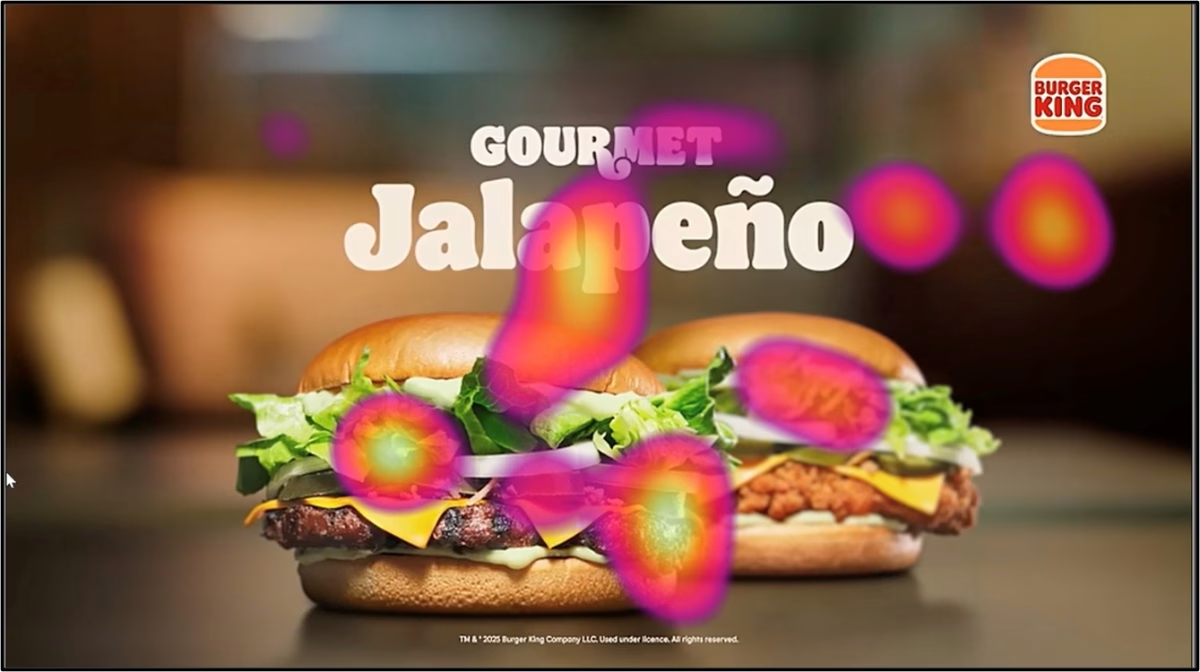
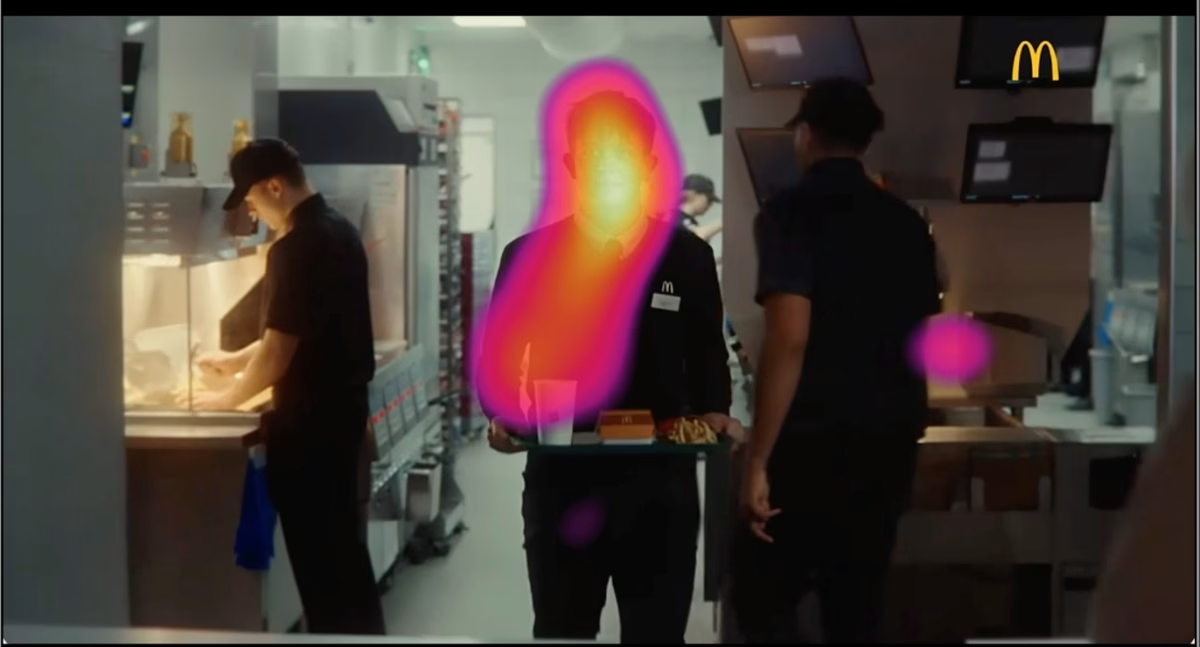
Example of students’ heatmaps of eye tracking data
I think they went a lot deeper into it than expected. In the beginning, there was a little, Oh, how can I use this? And, ‘Can we use this?’ And, ‘How do we do this?’ But I feel like when I saw it today, they have really made some progress.
They set out to explore some of the stuff that we talk about theoretically. During the presentations, they could see ‘Oh, we are looking there. Why are we looking there and not on brand?’ I could really see that making the teaching a lot more complete.-
-Sabine Kerff Michelsen
I was very happy and thrilled because they really got some good takeaways from the course. They took the software and the teaching method, the way you introduced them to it. They got really deep into how to use this and got really an extra view on how (…) well commercials compare to each other. They will take something from it that they wouldn’t have been able to learn otherwise.
–Christina Szankowski-Slidsborg
Teachers’ Perspectives
After the Masterclass concluded and students received their certificates, I talked to the teachers about the 2-day experience.
Me: Now that you’ve seen the whole process from beginning to end, do you feel like you would be comfortable teaching with it?
Definitely. I tried it with my colleagues at the teachers’ lounge as well. I think it takes some time to play with the software and the program. I think today, I got a clearer insight into how we could use it in our teaching.
–Sabine Kerff Michelsen
Yeah, very good. I want it. I want it like in my courses. I’m a marketing teacher, so it’s a perfect fit for the marketing course.
–Christina Szankowski-Slidsborg