



iMotions Blog
Veröffentlichungen
Found 41 articles
-

Wissenschaft in den Medien: Wie Biosensoren im Film eingesetzt werden
Uncategorized
-
VR: Training und Leistung [Teil 1]
Menschliche Faktoren
-
VR: Training und Leistung [Teil 2]
Sinnes- und Wahrnehmungsbezogene
-
Virtual-Reality-Erlebnis im Test: Wie Biosensoren das Potenzial von VR aufzeigen [Eine Fallstudie]
Menschliche Faktoren
-
Die Zukunft der Therapie – VR und Biosensoren
Akademien
-
Rehabilitation mit Virtual Reality – Die Zukunft der Physiotherapie
Das Wohlbefinden messen
-

Was versteht man unter Multimodalität in der biometrischen Forschung?
Uncategorized
-

Zukunftstrends Teil 1: Eye-Tracking.
Uncategorized
-

Virtual-Reality-Forschung in der Praxis – Fallstudien aus der Praxis unter Einsatz von Biosensoren
Akademien
-
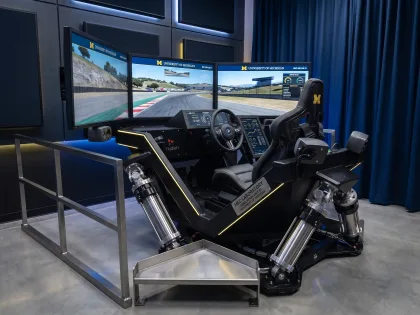
Sind Sie bereit für ein Labor zur Simulation biometrischer Verfahren?
Uncategorized
-
Wie man mit Eye-Tracking betrügerisches Verhalten aufdeckt
Akademien
-
Kann ich VR für die Biosensor-Forschung nutzen?
Uncategorized
-
Messung von Angstzuständen und vorausschauendem Verhalten mithilfe von Biosensoren in der virtuellen Realität
Menschliche Faktoren
-

iMotions API: Was ist das und wie können Sie damit Ihre Forschung optimieren?
Akademien
-
Fortgeschrittenes Eye-Tracking mit Smart Eye und iMotions
Uncategorized
-

Schulungen im Gesundheitswesen in Virtual-Reality-Umgebungen mit iMotions und Varjo
Menschliche Faktoren
-
Im Labor, in der Praxis oder auf dem Handybildschirm – Alles über Eye-Tracking-Setups
Uncategorized
-
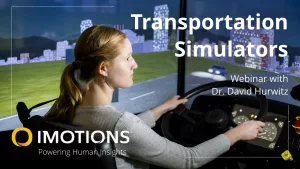
Verkehrssimulationslabore mit Dr. David Hurwitz
Menschliche Faktoren
-
Geschwindigkeit vs. Genauigkeit bei der Analyse – Lässt sich das Beste aus beiden Welten vereinen?
Uncategorized
-
5 eindrucksvolle Beispiele für den Einsatz von VR und AR mit iMotions
Uncategorized
-
Das Potenzial von VR-Eye-Trackern ausschöpfen: Funktionsweise und Anwendungsbereiche
Uncategorized
-
Forschung im Bereich Virtual Reality (VR) – Der umfassende Taschenführer
Akademien
-
Erste Schritte mit Virtual Reality in der Forschung
Menschliche Faktoren
-

Die 5 besten VR-Headsets mit Eye-Tracking für die wissenschaftliche Forschung (Liste 2026)
Hardware
-
Varjo VR-Headsets: Die ultimativen Werkzeuge für immersive Neurowissenschaften und Training
Hardware
-
Umfassender Leitfaden für Eye-Tracker-Preise: 15+ Optionen für jedes Budget im Test
Uncategorized
-

Was ist der Beobachtereffekt?
Akademien
-

Neuroarchitektur: Räume gestalten, die unserem Gehirn gerecht werden
Sinnes- und Wahrnehmungsbezogene
-

iMotions EduLabs: Biometrische Technologie für alle zugänglich machen
Akademien
-
Kann man das HTC VIVE Pro Eye für Eye-Tracking-Untersuchungen verwenden?
Uncategorized
-
10 effektive Möglichkeiten, Microsoft Hololens in Verbindung mit iMotions für Forschungszwecke zu nutzen
Uncategorized
-
VR, EEG und iMotions: Neuromarketing-Forschung der nächsten Generation
Uncategorized
-
Was ist VR-Eye-Tracking? [Und wie funktioniert es?]
Uncategorized
-

Forschung zum menschlichen Verhalten: Der umfassende Leitfaden
Uncategorized
-
Wie die Eye-Tracking-Technologie die Welt verändert [5 Beispiele]
Uncategorized
-
Analysieren und Interpretieren von Heatmaps
Uncategorized
-
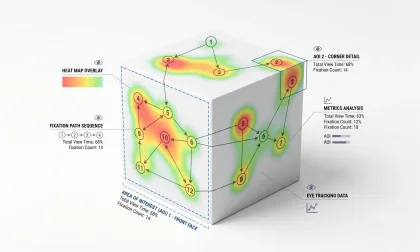
Die 10 meistverwendeten Eye Tracking Metriken und Begriffe
Uncategorized
-

Was sind R-Notebooks in iMotions?
Uncategorized
-

So richten Sie ein hochmodernes Forschungslabor ein [Schritte und Beispiele]
Uncategorized
-

Wie werden Simulationen in der Verhaltensforschung eingesetzt?
Akademien
-

Preise für VR-Headsets – Ein Überblick über mehr als 20 Modelle
Uncategorized
-
2025 Applications of Immersive Technology in Architecture, Engineering and Construction Gated Peer-Reviewed
A Virtual Reality Approach to Enhancing Hazard Perception in Construction Using Eye-Tracking and Deep Learning
University College London + 1 more
Over 50% of onsite hazards remain unrecognised, primarily due to poor hazard perception and attention deficits. Eye-tracking can help in understanding human visual attention and cognitive response, but its application in construction has been restricted by the reliance on two-dimensional (2D) stimulus, such as pictures, which often lack realism. This study proposes a novel immersive […]
-
2024 2024 IEEE International Symposium on Mixed and Augmented Reality Open Access Peer-Reviewed
Exploring Eye Tracking to Detect Cognitive Load in Complex Virtual Reality Training
Northeastern University
Virtual Reality (VR) has been a beneficial training tool in fields such as advanced manufacturing. However, users may experience a high cognitive load due to various factors, such as the use of VR hardware or tasks within the VR environment. Studies have shown that eye-tracking has the potential to detect cognitive load, but in the […]
-
2024 International Journal of Contemporary Hospitality Management Open Access Peer-Reviewed
How immersive technologies impact behavioral responses in destination marketing: the role of physiological arousal, presence, and age
Politecnico di Milano + 1 more
Purpose This paper aims to investigate the effectiveness of immersive virtual reality (VR) media and the influence of user’s age in the context of destination marketing by exploring their impact on cognition (presence), affection (arousal), and behavioral (intention to visit and intention to recommend the destination) outcomes. Design/methodology/approach A laboratory experiment was conducted to compare […]
-
2024 Design Computing and Cognition DCC’24 Open Access Peer-Reviewed
Visual Attention to Biophilic Elements in Virtual Classroom Design: A VR Eye-Tracking Study
Catholic University of Korea + 1 more
Recently, interest in indoor nature-based solutions through biophilic design interventions has grown across various spatial contexts. This study examines the influence of biophilic elements in virtual classroom design on university students‘ visual attention, utilizing eye-tracking integrated with VR technology. This study focuses on how eye-tracking can provide insights into attention processes in relation to biophilic […]
-
2024 Information Technology & Tourism Gated Peer-Reviewed
Developing 360-degree stimuli for virtual tourism research: a five-step mixed measures procedure
Griffith University + 1 more
Virtual reality has emerged as a powerful tool for the design of immersive tourism experiences. Prior studies have primarily relied on externally produced 360-degree stimuli, with the potential to undermine causal inference among concepts and increase risk of flattening real-world responses. Consequently, building on design principles embedded in human–computer interaction, this paper draws on an […]
-
2024 Tourism Management Gated Peer-Reviewed
Towards a typology of virtual tourists: Efficacy of visual patterns and attentional cues
Griffith University + 1 more
Virtual tourism is rapidly emerging in prominence in contemporary tourism research. Previous studies tend to consider the virtual tourism population as a homogeneous entity, resulting in unintended consequences. Despite the ocular-centric nature within virtual environments, existing eye tracking studies have rarely classified virtual tourists into benefit-based segments, discounting the critical role of pre-existing visual patterns and associated […]
-
2024 Applied Ergonomics Open Access Peer-Reviewed
Investigating the impact of greenery elements in office environments on cognitive performance, visual attention and distraction: An eye-tracking pilot-study in virtual realityUnveiling impact dynamics: Discriminatory brand advertisements, stress response, and the call for ethical marketing practices
Universita Politecnica Delle Marche
The human-nature connection is one of the main aspects determining supportive and comfortable office environments. In this context, the application of eye-tracking-equipped Virtual Reality (VR) devices to support an evaluation on the effect of greenery elements indoors on individuals’ efficiency and engagement is limited. A new approach to investigate visual attention, distraction, cognitive load and […]
-
2024 Robotics and Computer-Integrated Manufacturing Gated Peer-Reviewed
UX assessment strategy to identify potential stressful conditions for workers
University of Modena and Reggio Emilia + 1 more
The European Commission defined the new concept of Industry 5.0 meaning a more human-centric, resilient, and sustainable approach for the design of industrial systems and operations. A deep understanding of the work environment and organization is important to start analysing the working conditions and the resulting User eXperience (UX) of the operators. Also, the knowledge […]
-
2023 Applied Sciences Open Access Peer-Reviewed
A Comparative Study of Real and Virtual Environment via Psychological and Physiological Responses
Universitat Politècnica de València + 1 more
Currently, immersive virtual environments (IVE) are widely used in fields such as architecture and environmental psychology. These simulated environments allow for a detailed evaluation of how different designs impact users’ perception and interaction with the built environment, under controlled conditions and without incurring high costs. The validity of these IVEs is related to their capacity […]
-
2023 Institute of Electrical and Electronics Engineers Gated Peer-Reviewed
Visual Analysis and Recognition of Virtual Reality Resolution Based on Pupil Response and Galvanic Skin Response
University of Science and Technology of China
The ability to efficiently assess the resolution of VR videos is critical for the implementation and advertising of VR products. Pupil responses and Galvanic Skin Response (GSR) are direct and objective mirrors of the emotional activity of humans. They are unaffected by subjective will and has excellent real-time performance, which can be used for VR […]
Forschungsbericht 2025
Ein detaillierter Einblick in die wissenschaftliche Landschaft, unterstützt durch die iMotions-Software, mit einem Überblick über bahnbrechende Forschungsergebnisse und die Auswirkungen unserer Tools in verschiedenen wissenschaftlichen und industriellen Bereichen.
iMotions – Wissenschaftliche Ressourcen
Suchen Sie nach Whitepapers, Validierungsberichten oder Forschungsergebnissen, die die multimodalen Funktionen von iMotions veranschaulichen?
Teilen Sie Ihre Forschungsergebnisse

Über 850 Hochschulen weltweit mit einem iMotions-Labor zur Erforschung des menschlichen Verhaltens
73 der 100 am höchsten eingestuften Universitäten
Über 710 veröffentlichte Forschungsarbeiten unter Verwendung von iMotions
iMotions wird für einige der interessantesten Forschungsstudien zum menschlichen Verhalten eingesetzt, die von Spitzenforschern auf der ganzen Welt durchgeführt werden. Kontaktieren Sie uns, damit Ihre Veröffentlichung hier vorgestellt wird.
Die Autoren dieser Veröffentlichungen haben iMotions im Rahmen ihrer Forschung als Software-Tool eingesetzt.
„Software sollte auf derselben Grundlage zitiert werden wie jedes andere Forschungsergebnis, beispielsweise ein Artikel oder ein Buch; das heißt, Autoren sollten die entsprechenden Softwareprodukte genauso zitieren wie die entsprechenden Artikel“ (Katz et al., 2020).
Wir möchten Sie daher bitten, die Verwendung von iMotions an geeigneter Stelle anzugeben.
Wie zitiert man iMotions?
APA
iMotions (10), iMotions A/S, Kopenhagen, Dänemark, (2024).
Hinweis: Passen Sie die Version und das Jahr gegebenenfalls an.